
Stuguns Nya kyrka - Roof only - Efficiency: 18%
The Building
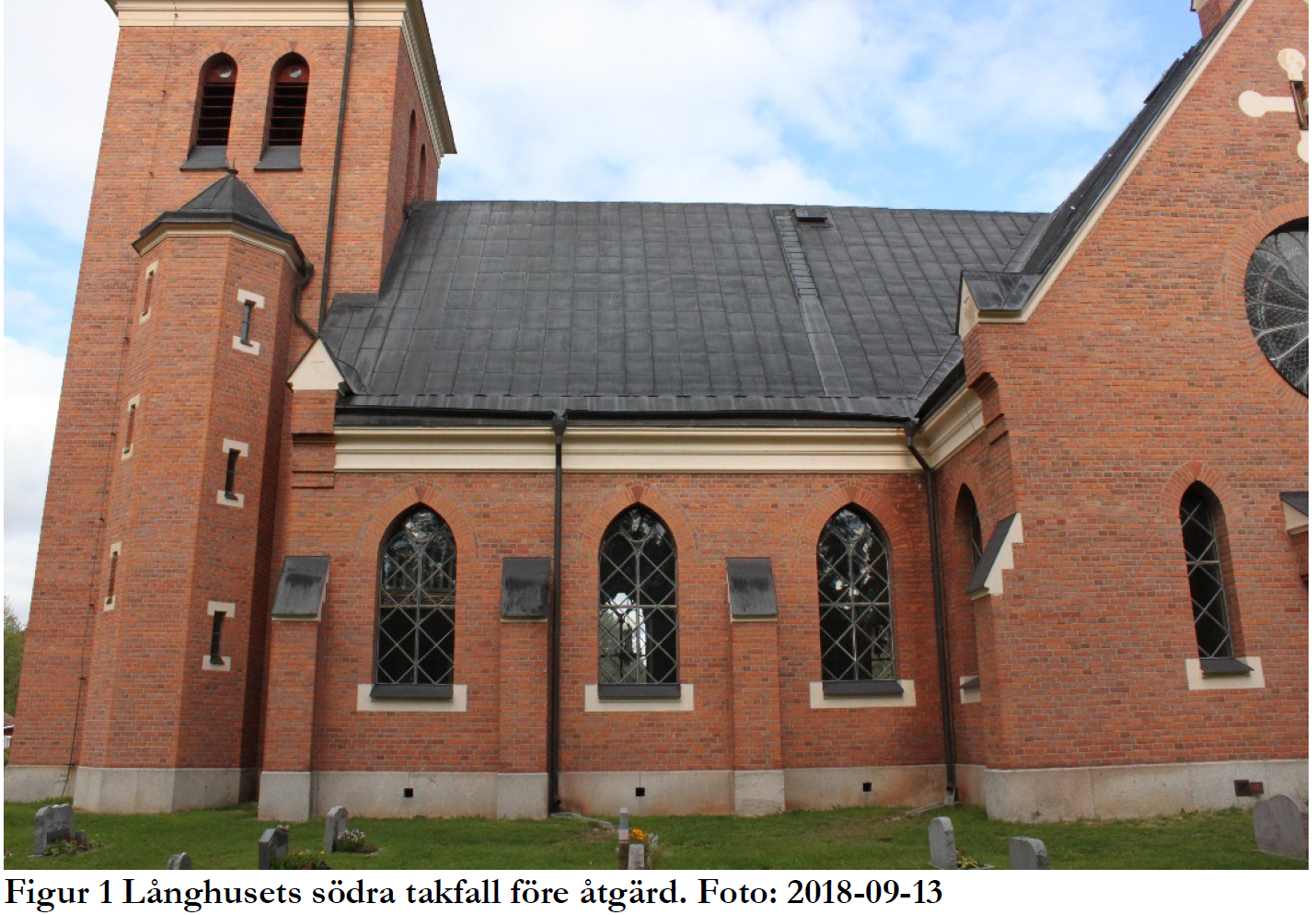
Building pre-intervention
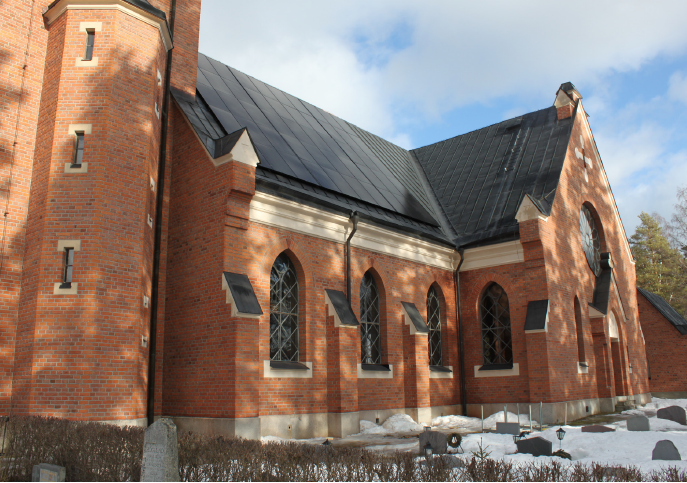
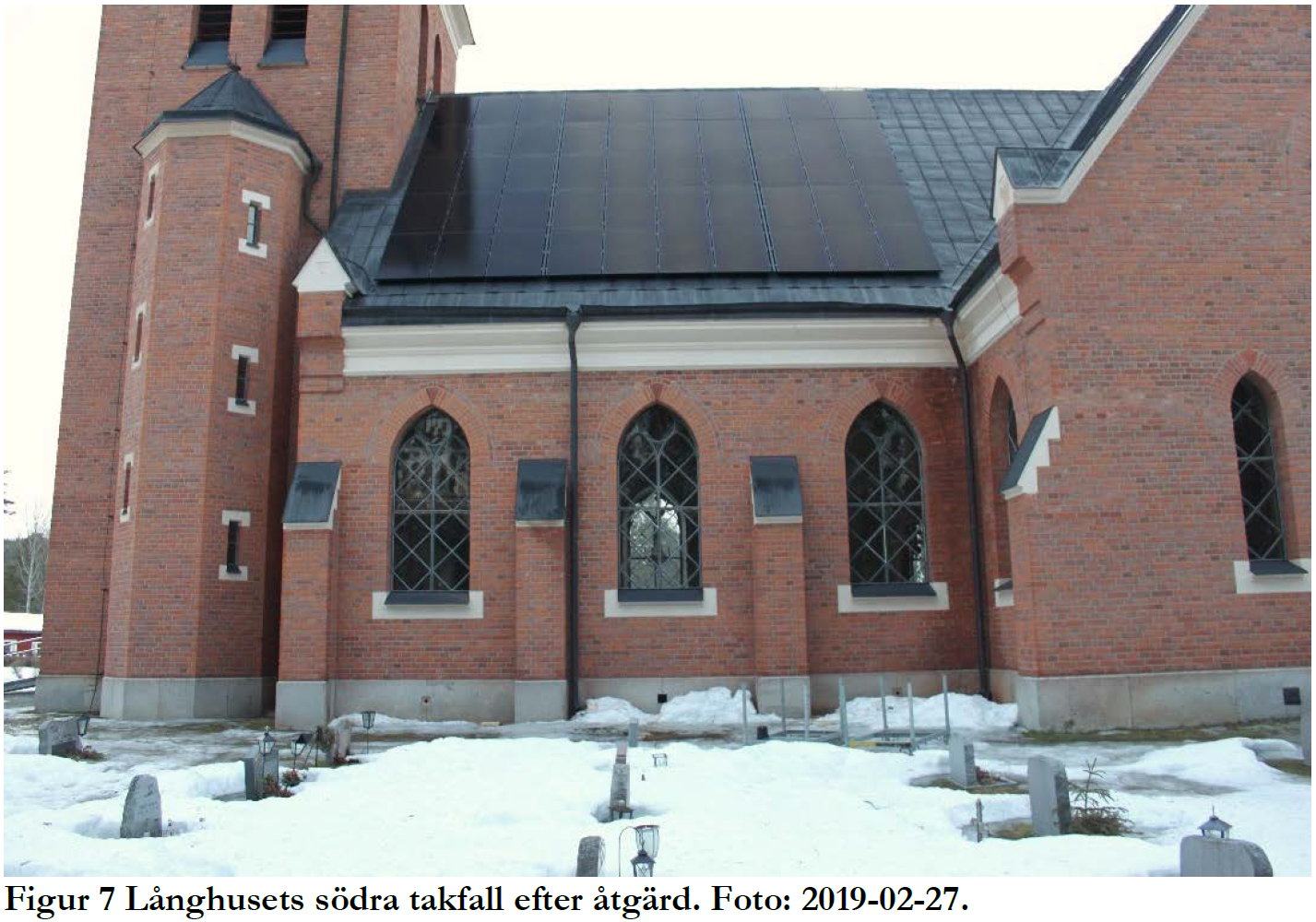
Building post-intervention
Stuguns Nya kyrka
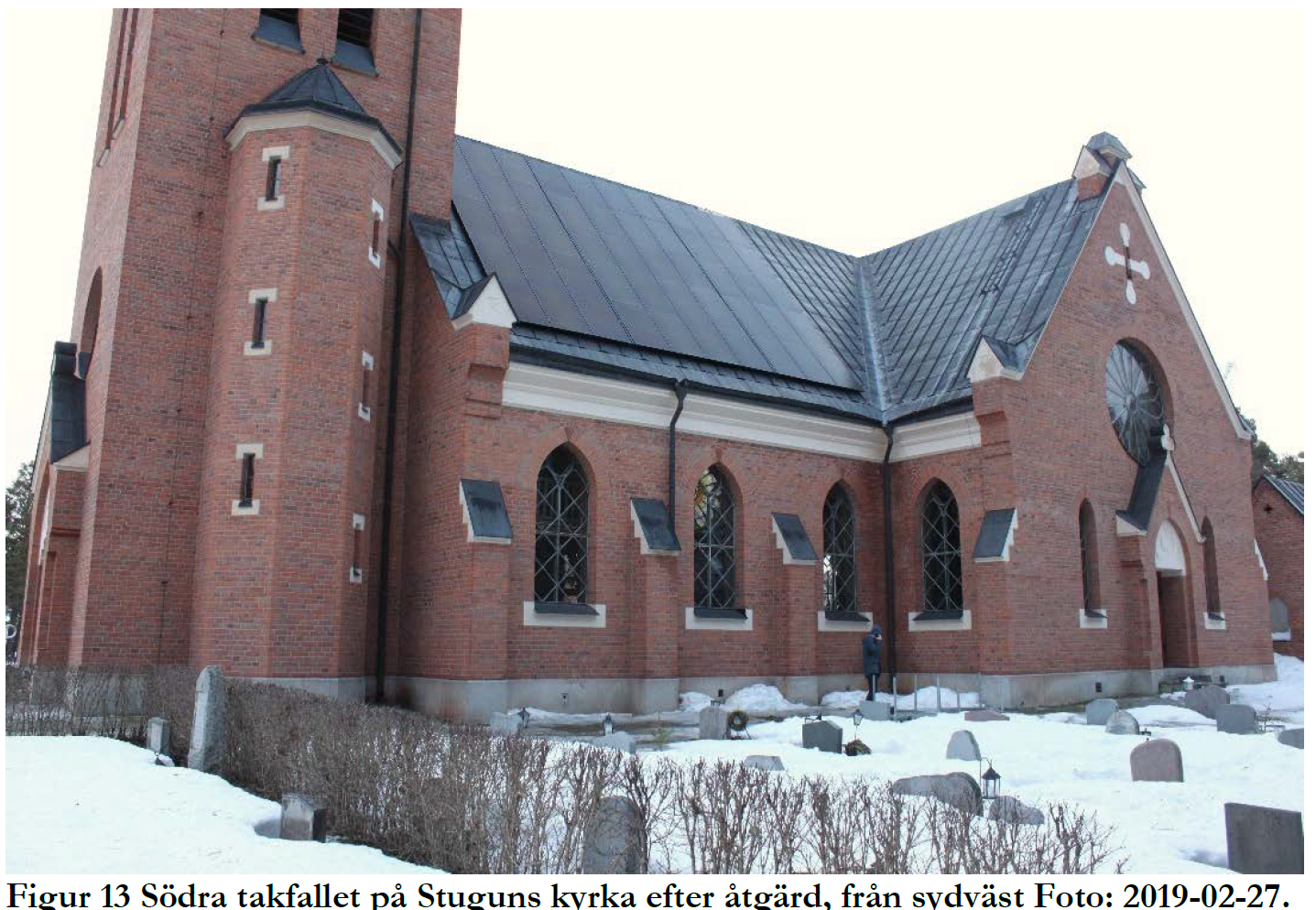
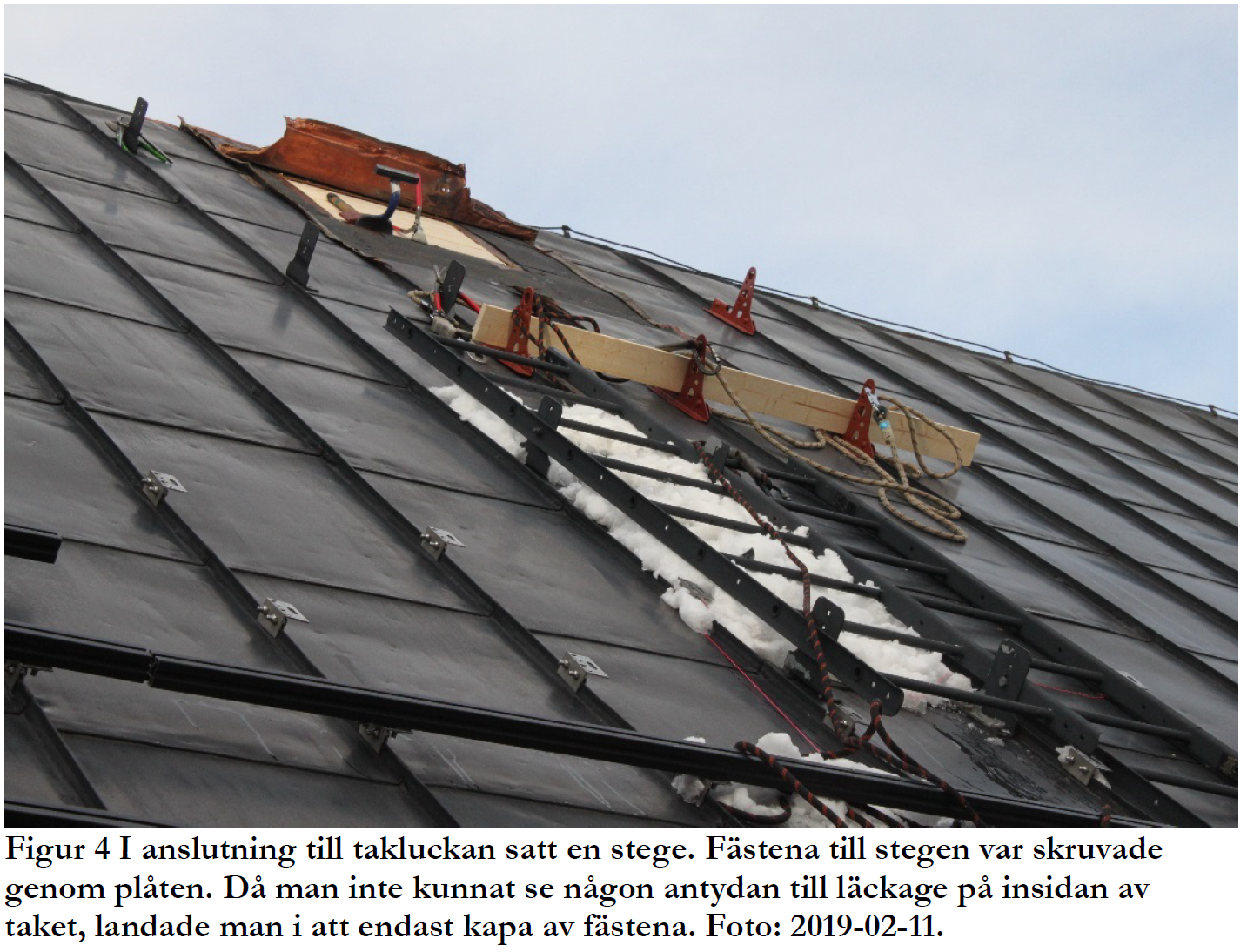
Stuguns New Church represents the first example of the use of solar panels on a protected church building in Sweden. It is located in the municipality of Ragunda, in Jämtland County. Designed by architect Carl Fredrik Ekholm it was built between 1894-96 and is one of the foremost examples of C19th brick Gothic architecture in Jämtland County. The church has undergone only minor changes over the years and its neo-Gothic character remains intact. In 1994-95 the original metal roof covering was replaced with a new standing-seam roof in copper. The aim of the parish was to use solar PV to reduce the operating costs and climate impact of the church. The County's decision was based on a heritage impact assessment (kulturhistorisk konsekvensanalys) that was submitted as part of the permitting process. The project would involve the removal of an existing steel ladder and roof access hatch ( presumably installed during the 1994-95 renovation), as these would have impacted on the layout of the solar panels which were planned to be installed on the on the south-facing roof. A building heritage consultant (Byggnadsantikvarie) Henrik Ylikoski was responsible for the heritage aspects of the project. In March, 2018 Håsjö parish received permission from the Jämtland County administrative board to install the solar panels.
The Solution
Solution post-intervention
What is the Solution?
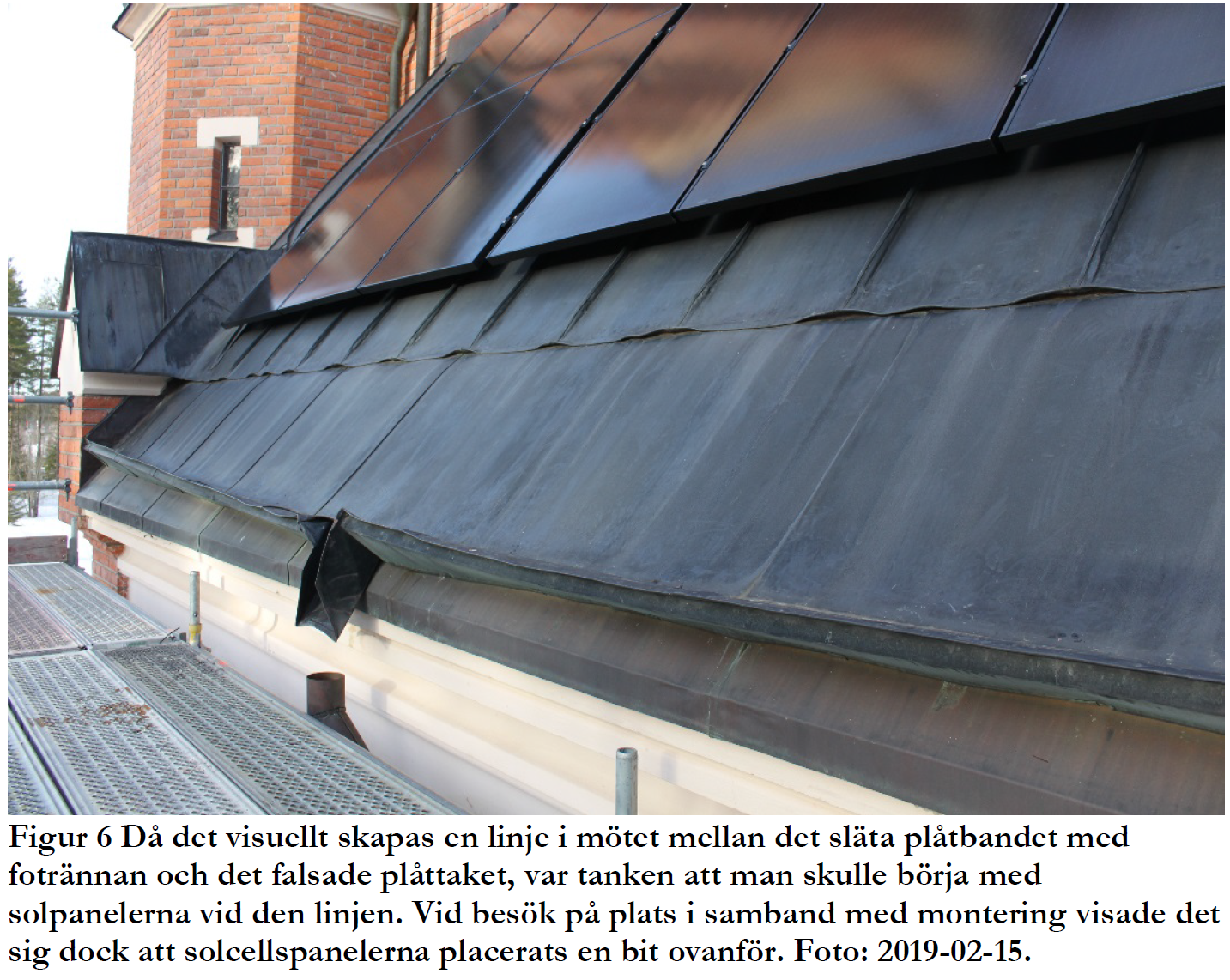
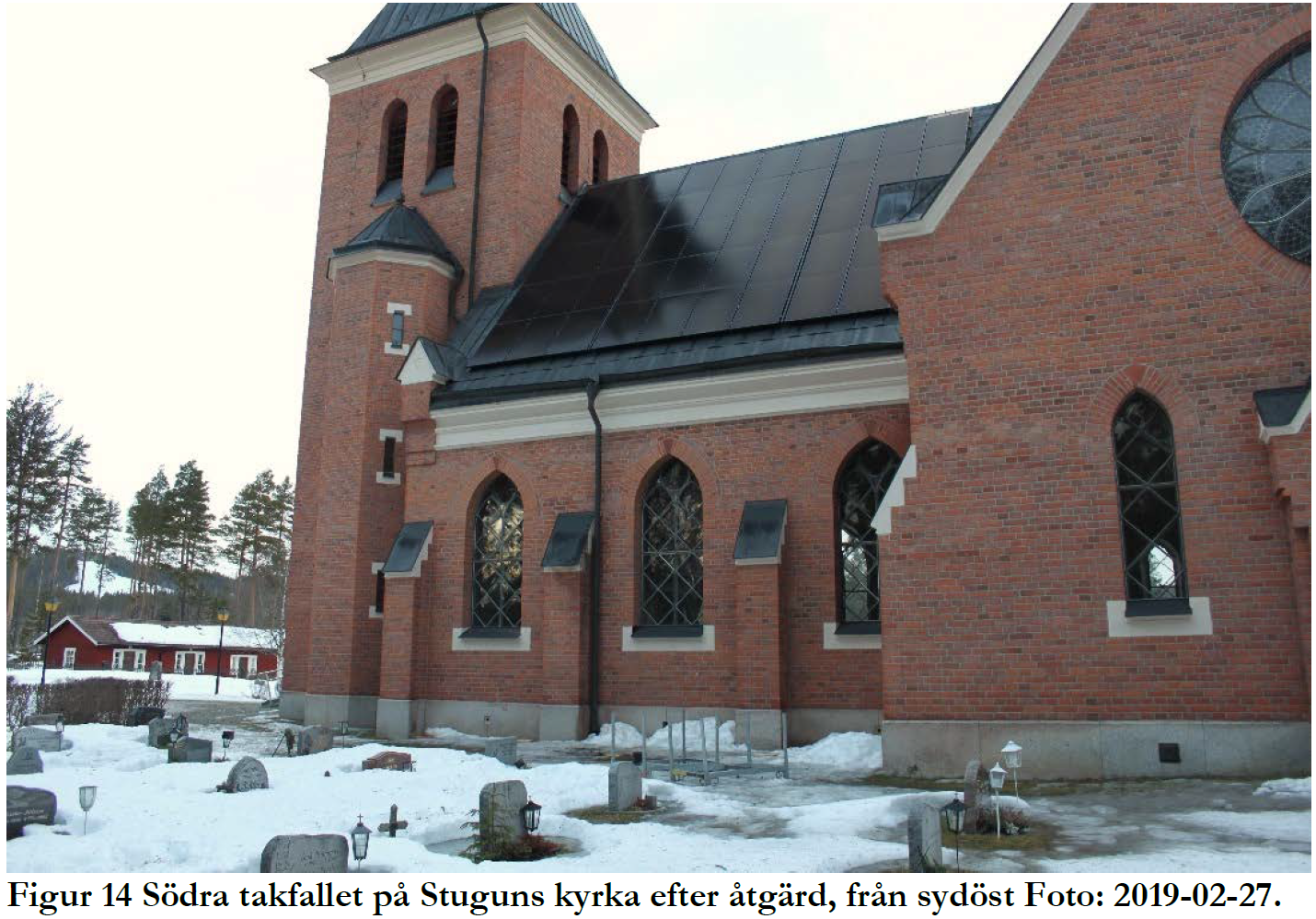
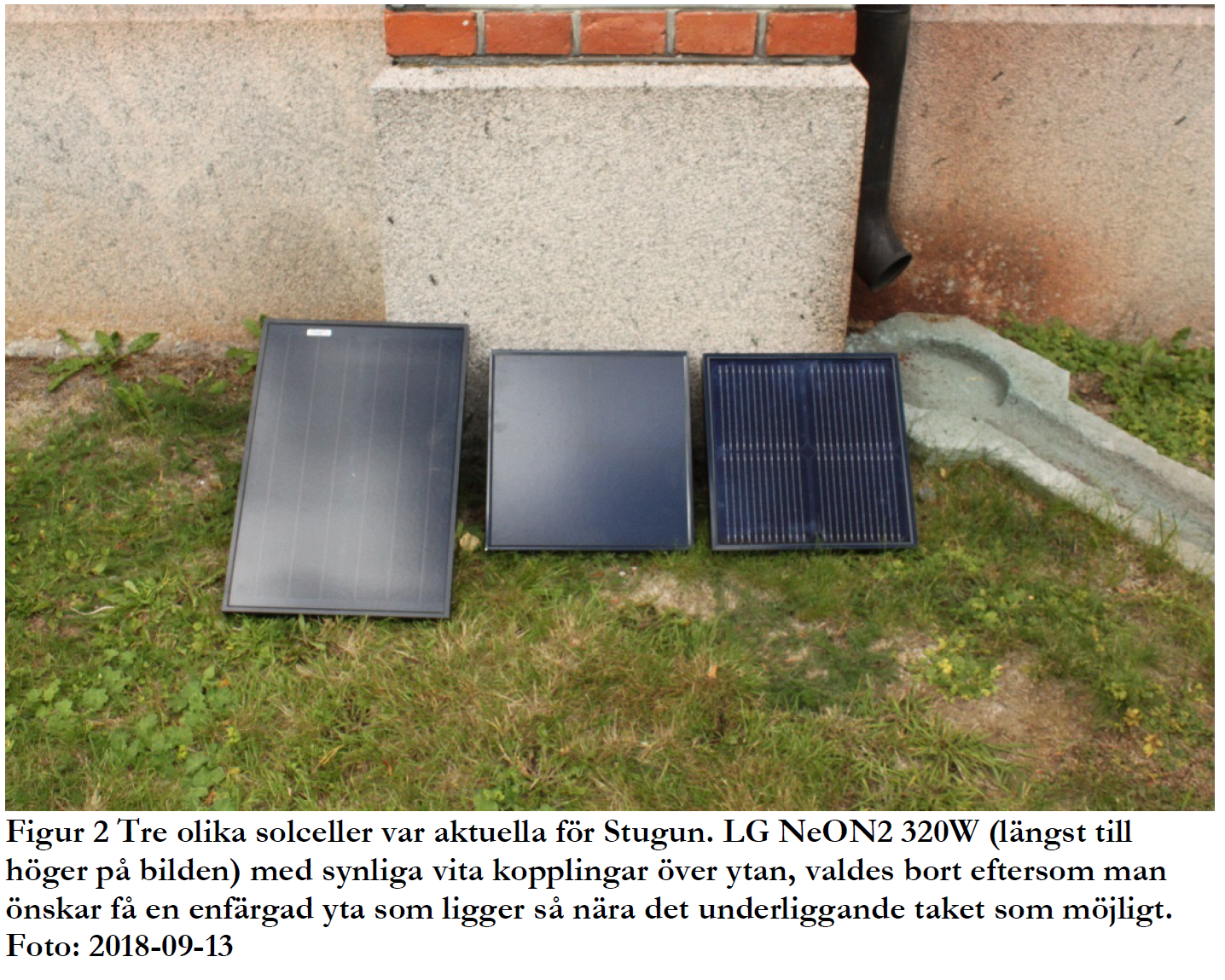
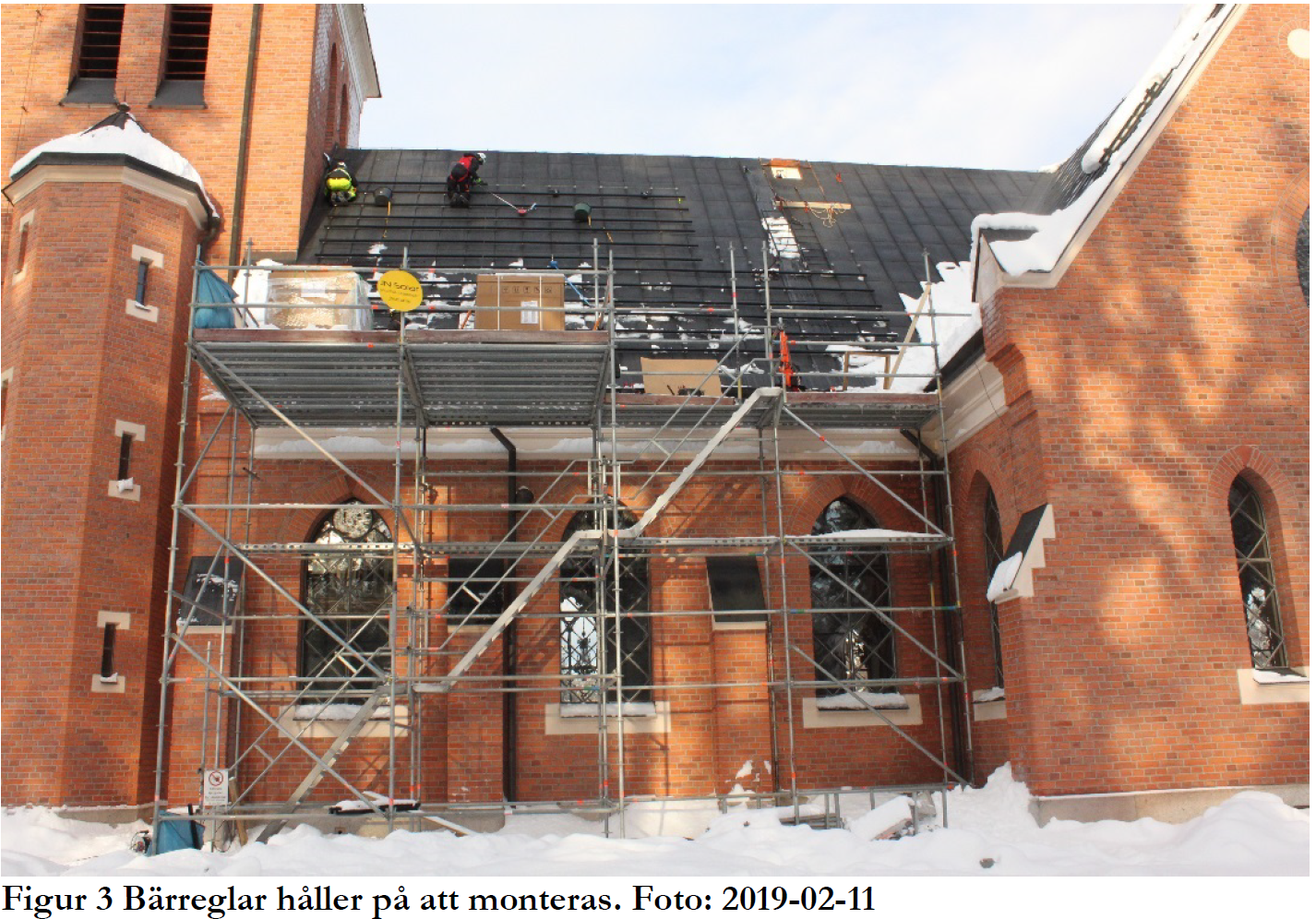
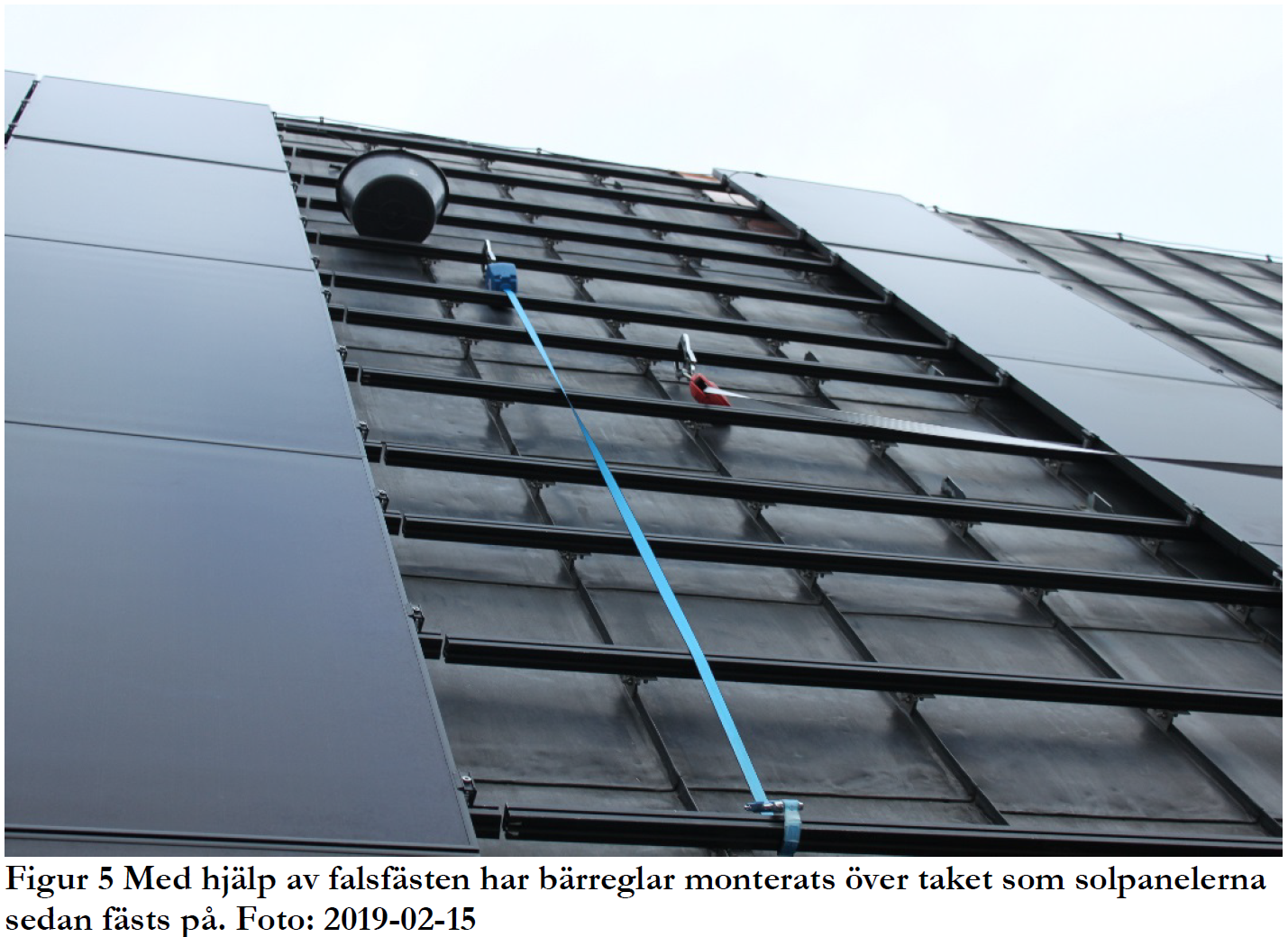
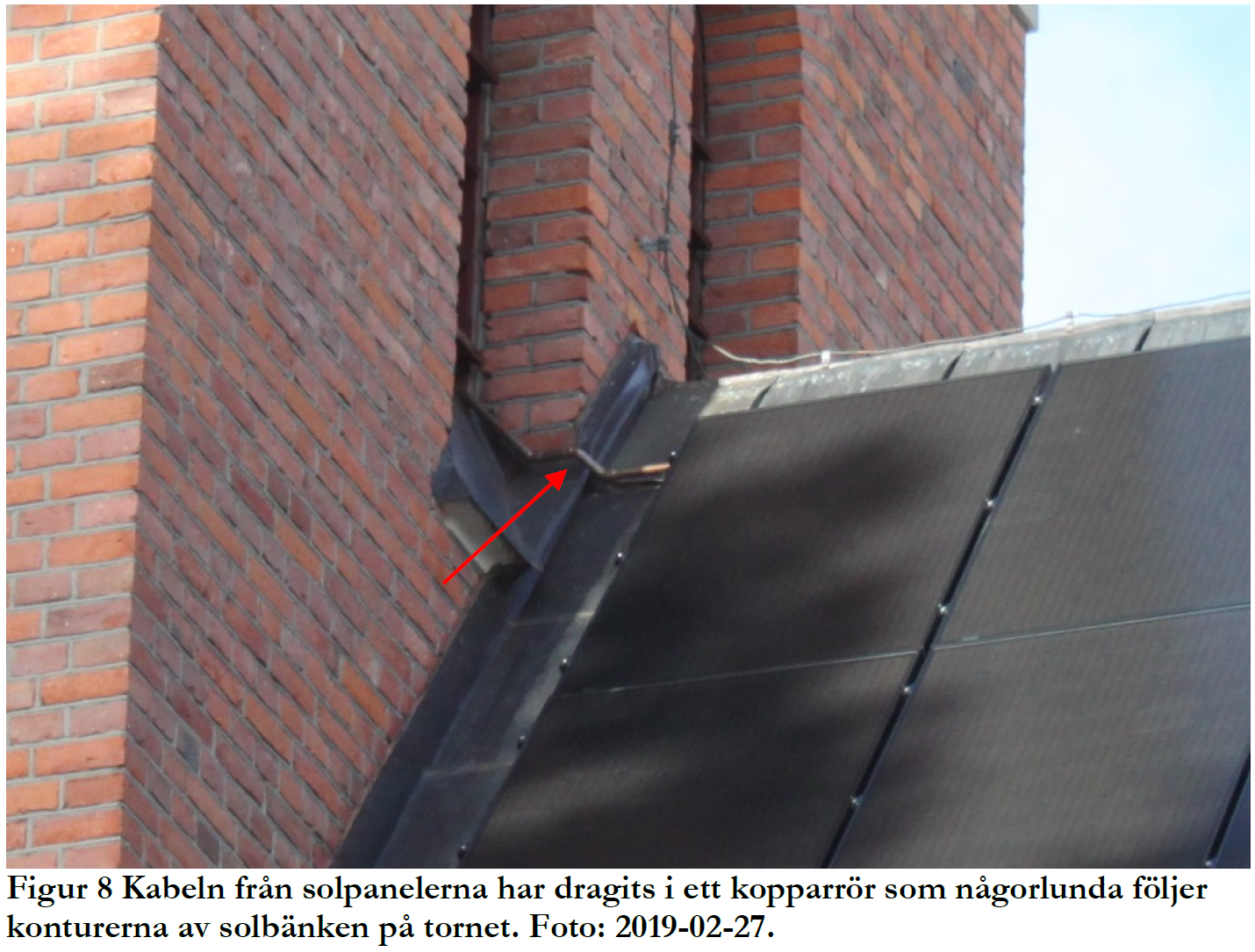
The BAPV solar installation consists of 50 No. Perlite "Think Black" 300W PV panels. The glass/glass panels are installed using a discreet aluminium self-supporting frame installed above the existing standing-seam copper roof. From a distance the supporting framework is not visible and the installation appears almost as a single large matt black rectangle. Each PV panel is ca. 170cm x 100cm and the installation is arranged to form the rectangular 10.5m x 8.5m array located on the south-facing slope of the nave roof. The supporting frame supplied by Schletter-Group is attached to the standing seams of the metal roof covering, using seam clamps. Therefore no holes were made in the existing sheet copper roof. The mounting system has been divided into 3 sections in order to handle thermal expansion without damage to the standing-seam fasteners. The frames are finished in a matt black finish to blend in better with the panels and existing roof. In order that the solar panels appear more like a single surface black coloured strips have been used to narrow any gaps. The use of seam clamps increases the reversibility of the installation as these can be removed later without damaging the roof. The inverter (Huawei SUN2000-17KTL) is installed in the church tower together with electrical switchgear . Locating the electrical ancillaries in the tower, rather than in the basement, meant shorter cable runs. The external cabling from the panels is discreetly run in a short length of copper piping into the tower through one of the existing openings. To enable the facility to be controlled wirelessly a receiver/transmitter is used with an antenna installed behind one of the wooden louvres in the church tower. This makes it almost invisible from the outside.
Why Does it work?
The Perlite "Think Black" panels were chosen to match the colour of the existing metal roof as closely as possible. By removing an existing roof ladder and access hatch a larger rectangular area that suits the dimensions of the panels was made available for the PV installation. The location of the panels is on a south facing roof slope with only partial shading from the adjacent bell tower. The south-facing roof slope was selected as the optimum location for the PV's, not only from a technical performance perspective but also because the southerly roof slope faces a nearby woodland area. The result is that the PV installation is not visible from the main access route to the church, nor from most of the surrounding area and nearby roads. This choice of location therefore mitigates the visual impact and was an important factor for approval of the project. It is perhaps interesting to note that the nearest road running through the woodland and passing just south of the church is called Energivägen (The Energy Road). Although we have not found any evidence that this was a material factor in the permitting process it is perhaps an interesting fact nevertheless, and presumably so named because of the other renewable energy production in the form of the Stugun hydro-electric power plant on the nearby river.
- Relatively simple and inexpensive BAPV installation with good efficiency. Careful attention has been given to the selection of the panels, their colour, reflectivity, arrangement, siting, wiring and the anchoring system. This has resulted in a clean, simple rectangular shape, that makes good use of the area available on the south sloping roof. From the ground it looks as if the panels go right up to the ridge. In reality the panels are 50cm below the ridge. This makes the surface with the panels appear calmer than if they were placed further down with a visible strip of sheet metal roof above as a result. Location of the electrical ancillaries up in the church tower has reduced the need for external cabling on the building facade. The use of seam clamps to fix the support structure meant that there was no need to drill holes in the existing roof covering, and means that the solution is reversible with minimal impact on the building fabric. Laying the external cables in copper pipe that follows the surface contours of the building, makes less of a visual impact.
- Careful attention to detail has minimised the impact of almost all aspects of the installation. With the only significant negative impact being the visibility of the panels. The visual impact on the surrounding area is significantly minimised by the woodland to the south. It was considered that the visual impact was more than outweighed by the benefits of the clean energy produced by the PVs.