

Herz-Jesu-Kirche in Saas-Fee - Roof only - Efficiency: 18%
Solution Year
2022
Building Age
1960-1969
Listed Building
No
Conservation Area
No
Documenting Institution
LMNT Consultancy
Location
3906 Saas-Fee VS, Switzerland - 1792m
Building Type
Religious
Structure
information not available
The Building
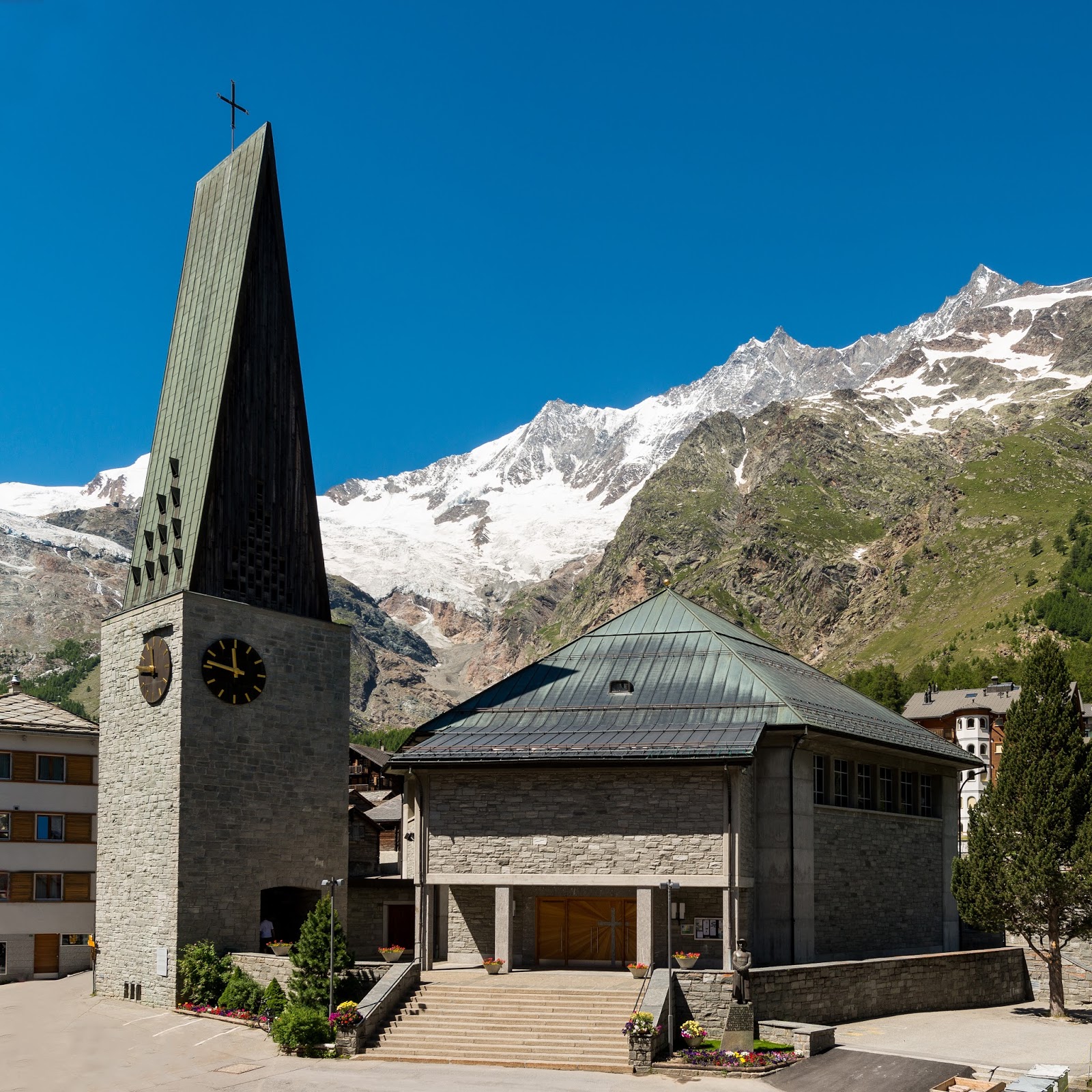
Building pre-intervention

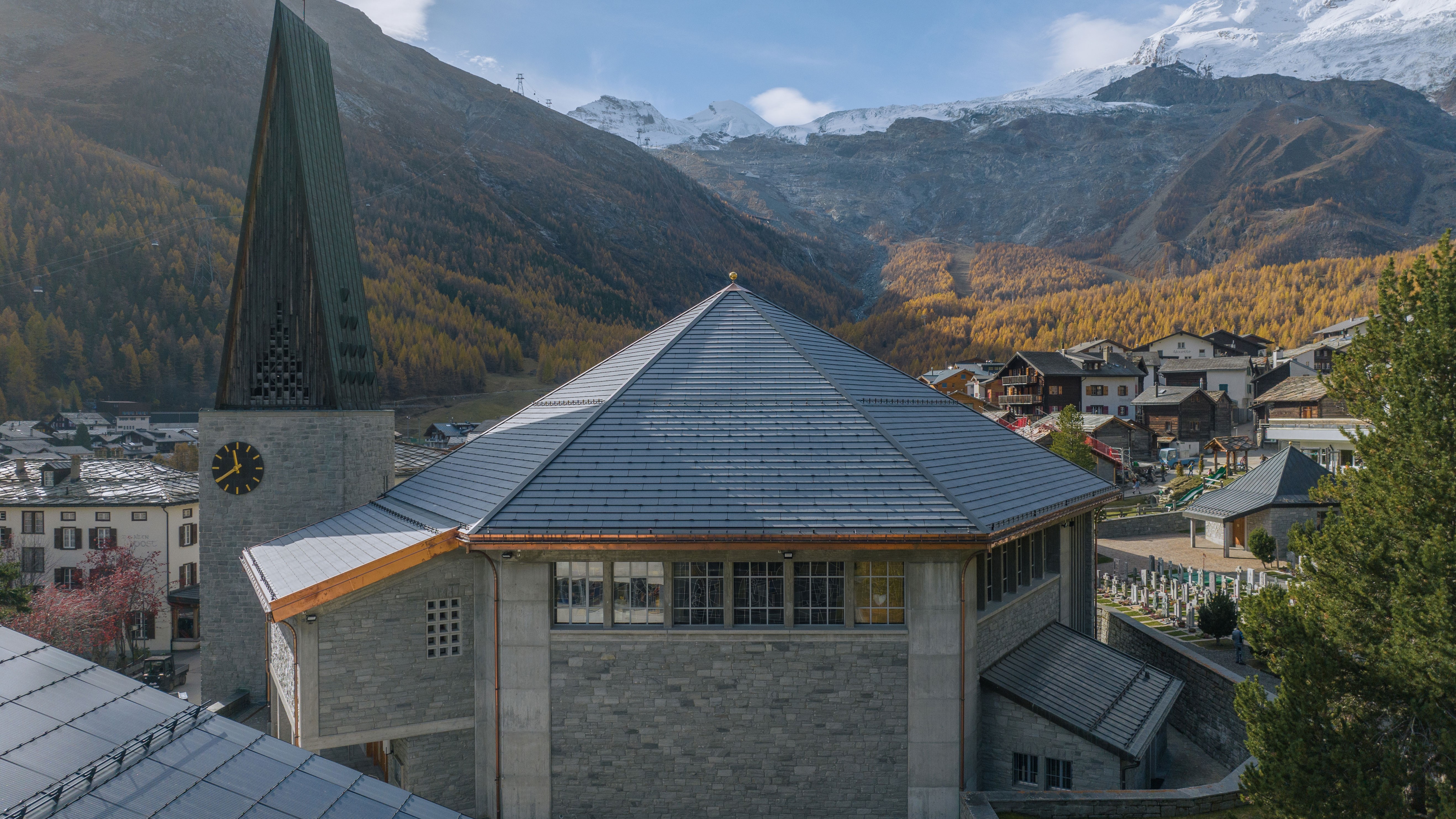
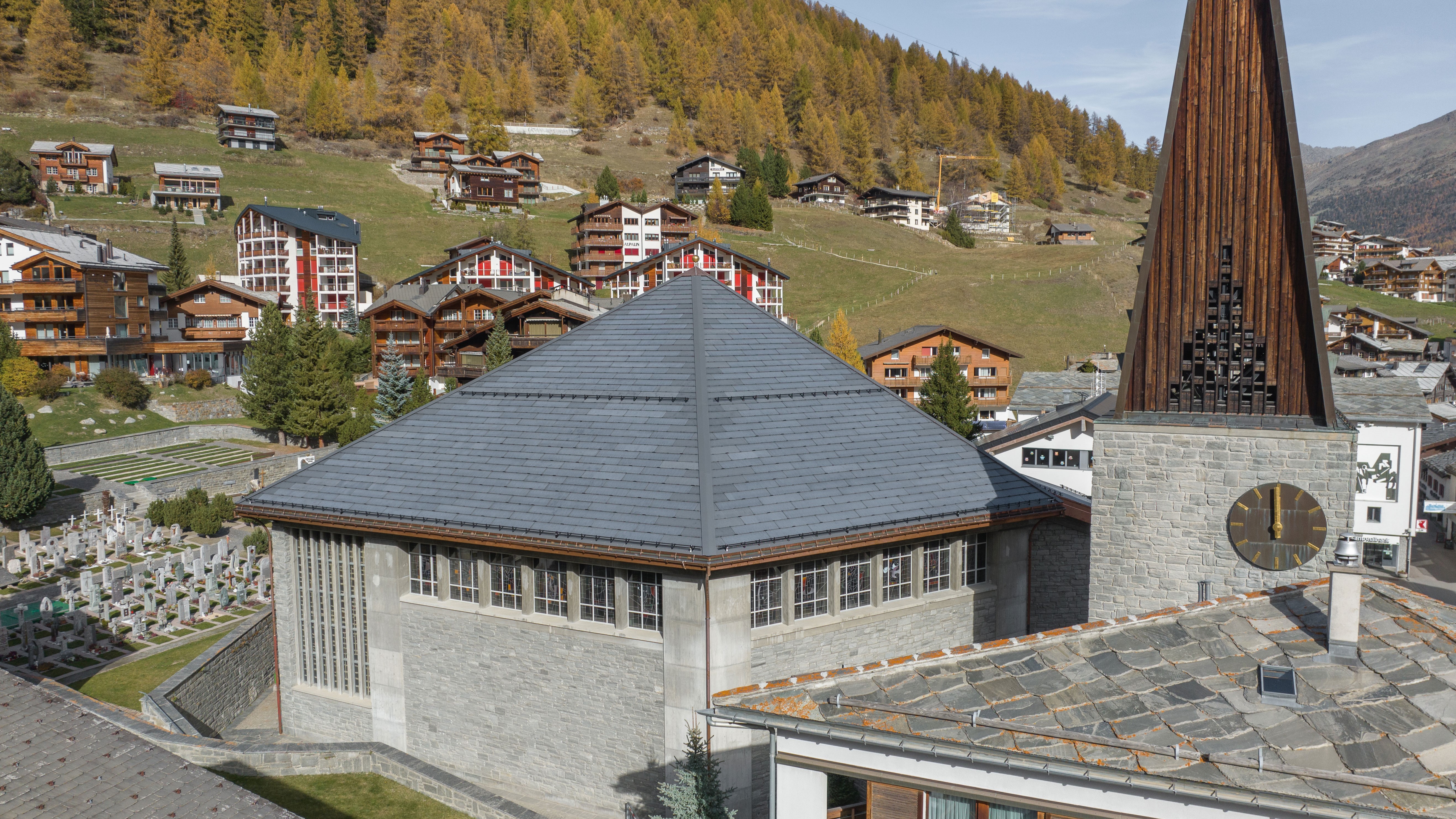
Building post-intervention
Herz-Jesu-Kirche in Saas-Fee
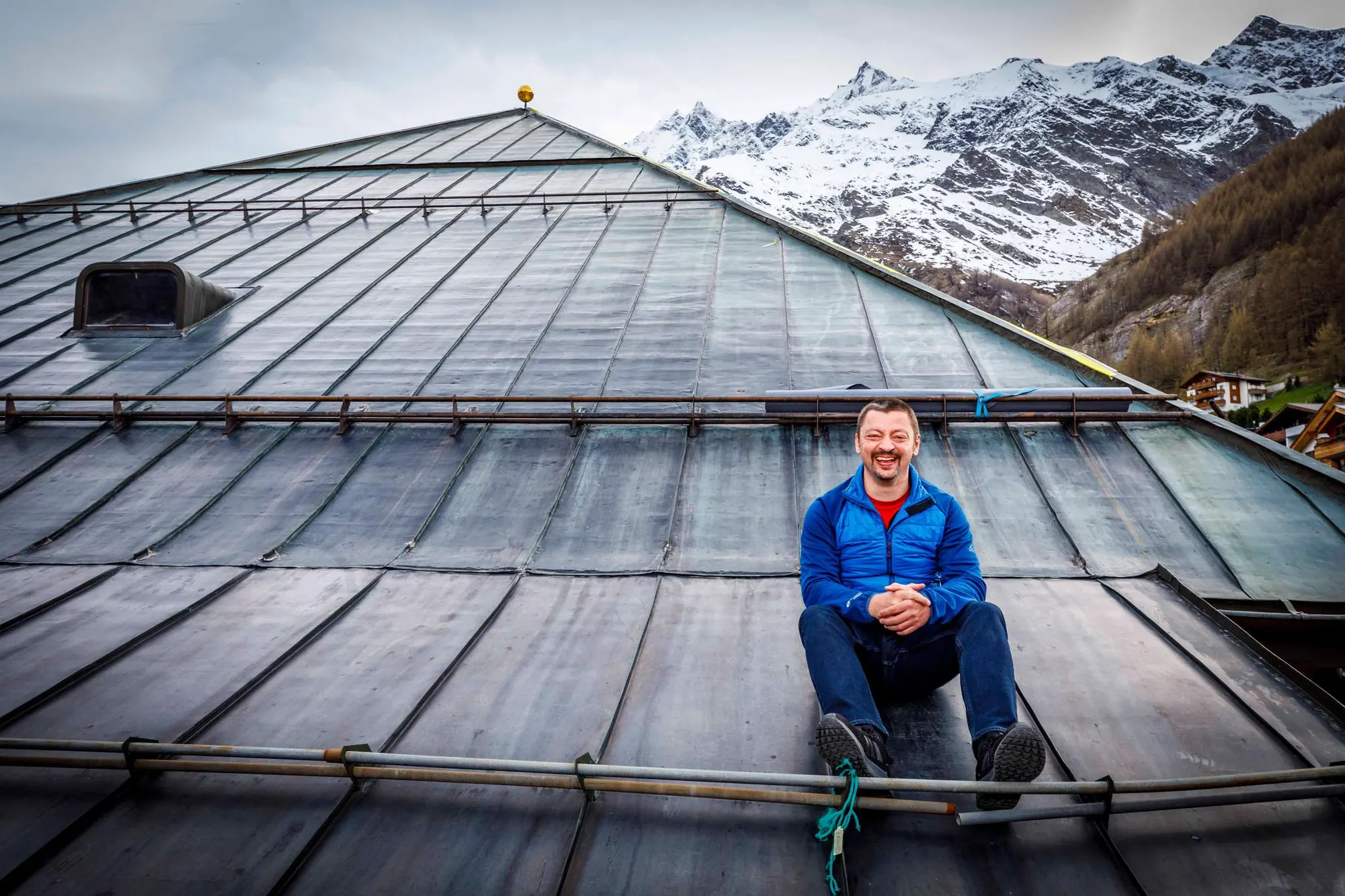
The car-free mountain village of Saas-Fee is located in the middle of the Swiss Alps at 1800 meters above sea level. Saas-Fee not only impresses as a winter and summer holiday destination, but has also been certified as an Energy Town since 2002 and as an Energy Town Gold since 2020. As an Energy City Gold, the municipality promotes renewable energies, environmentally friendly mobility and the efficient use of resources. When the old copper roof of the parish church, built in 1963, was in need of renovation three years ago, it was clear that conventional materials should not be used, but that the renovation should be as sustainable as possible. Nevertheless, it was crucial that the new roof should fit into the old village centre and not stand out surrounded by the traditional stone roofs.
The Solution
Solution pre-intervention
Solution post-intervention
What is the Solution?
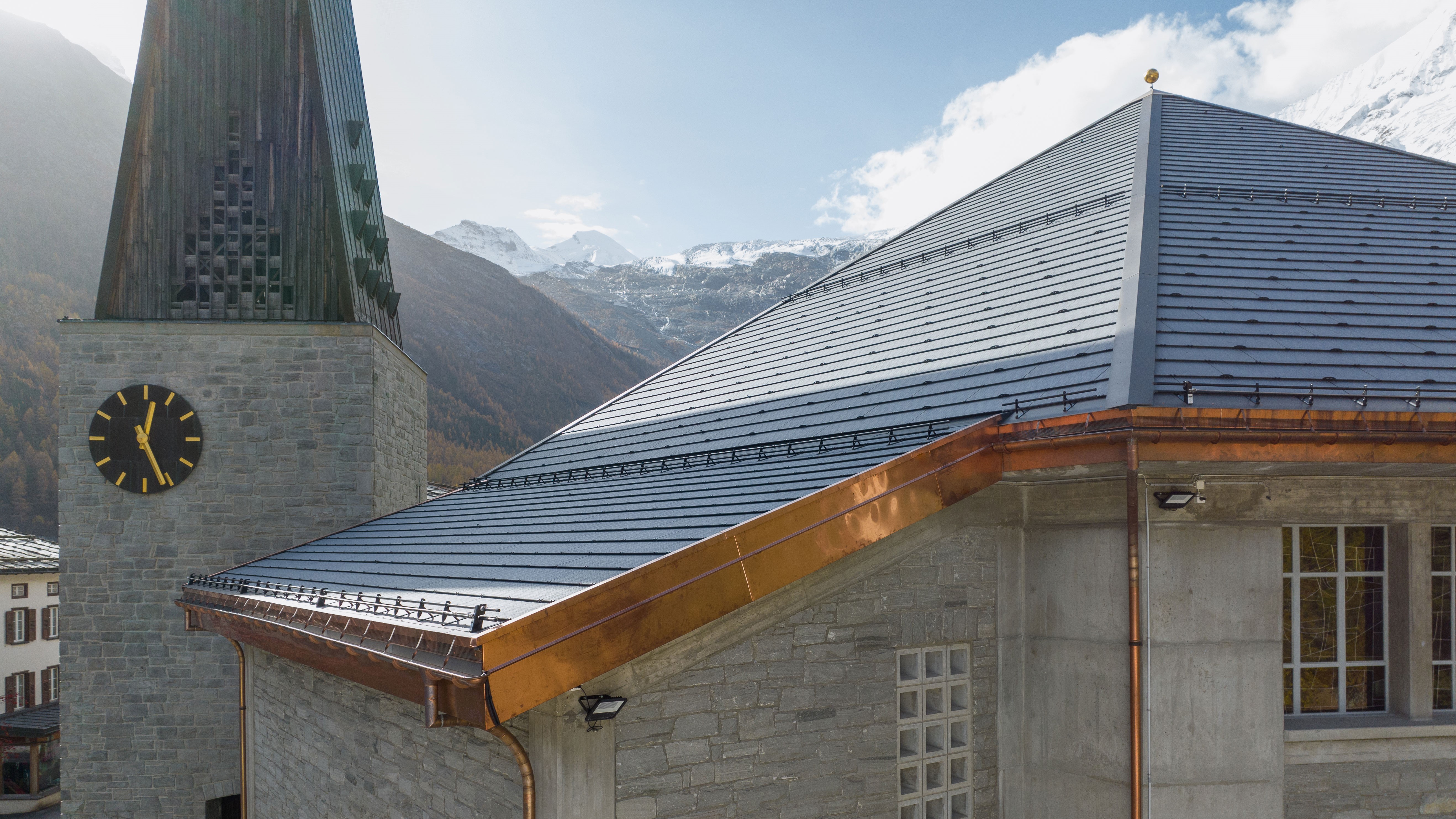
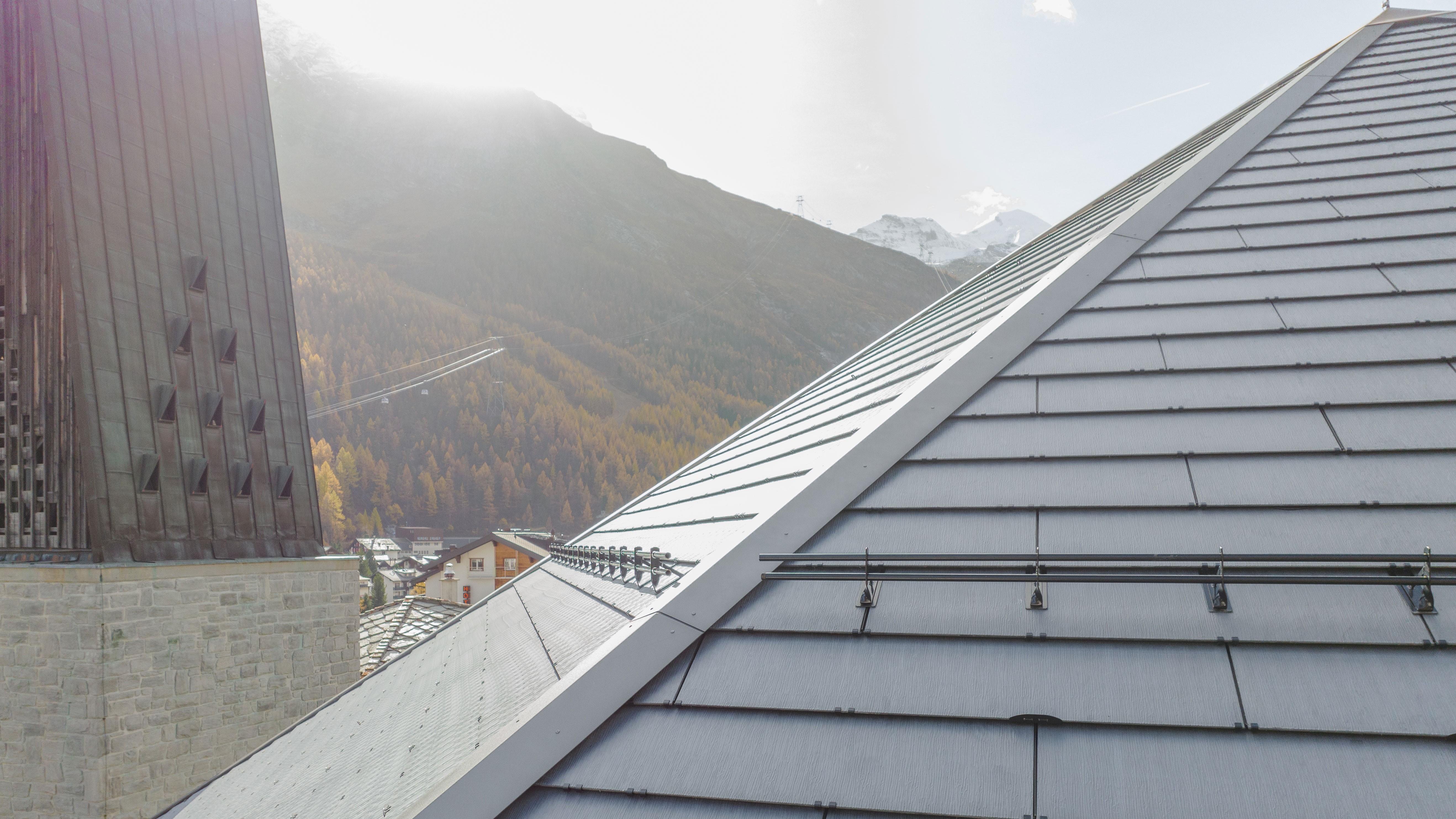
Although the church council was convinced of the merits of solar energy, the snow load and the visual appearance of a solar church roof initially raised doubts among some parish representatives. The church council was unsure whether a modern solar church roof would suit a parish church. Although many solar roofs still consist of conventional solar panels, there are now solar panels that are adapted in terms of colour and structure and no longer even shine. In a construction with these panels, you cannot tell at first glance that it is a solar roof. The use of these modern solar panels then convinced the church council and the project was commissioned.
Why Does it work?
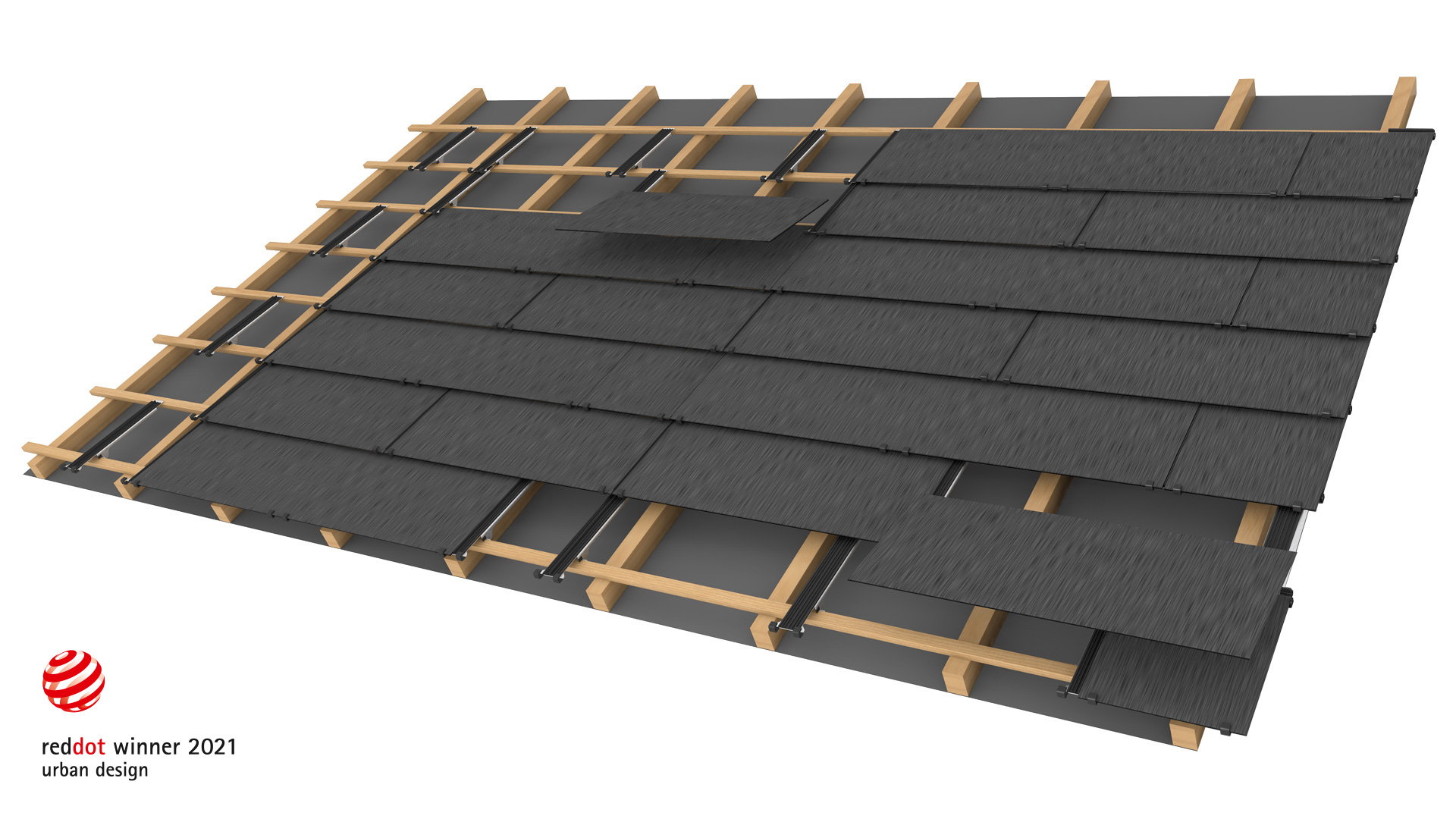
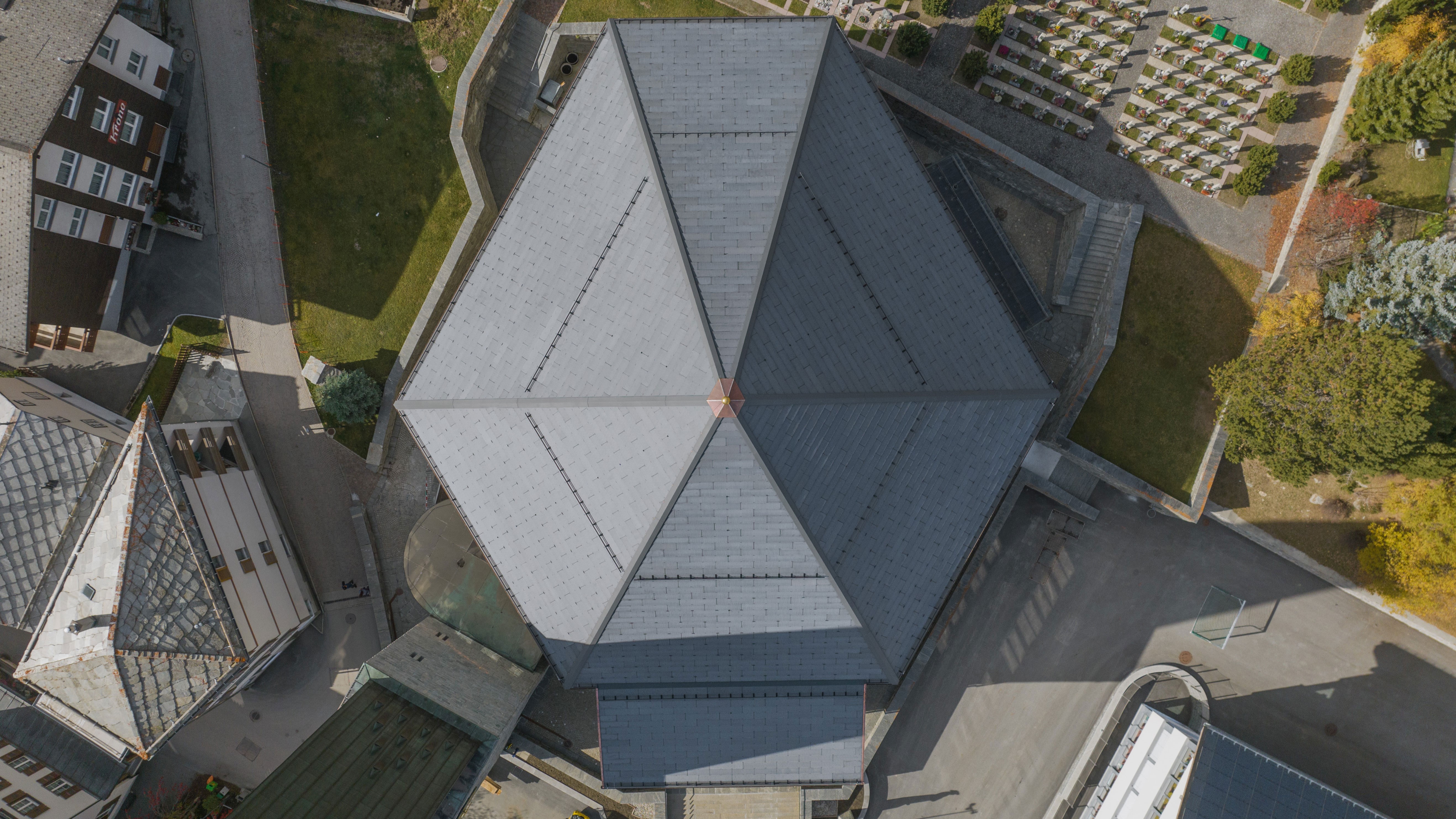
Over 700 individual modules of different sizes were produced for the church roof in Saas-Fee. Precise work is important here, with the first step being to precisely measure the individual sizes on the roof.
PROS
- Adaptable to building and site requirements (colour, texture, shape)
- The chosen solution could be a solution for listed buildings.
- The inactive modules provide a neat finish right down to the edges/angles, what not only preserves the appearance of the building, but also optimizes energy production.
CONS
- Lower energy performance than standard modules.
- Higher costs than a standard solution.
Type of installation
Replacement (building integrated - BIPV)
Part of the building
Roof only
Mounting system
MATCH Slate
Orientation
Divers orientation from S-E to N-O via S-W and N-E
Slope
35°
Area (m²)
1851 m²
Availability
Yes, available on the market
Manufacturer
Megasol
Model
Match Slate Creek Satin Grey
PV module format
Customized modules
PV module format max
Basic dimensions of the rectangular tile : 465 x 1081 mm
PV module type
Glass-Glass
PV cells technology
c-silicon
PV module efficiency
0.1825
Total PV power
97 kW
Surface PV power (W/m²)
52.4 W/m2
PV energy production
abt. 80'000 kWh/yr
Weight
information not available
Dummy modules used?
Yes
Frame
No
Overlapping
Yes
Colorization
Yes (coloured modules)
Colorization technology
Multi-layered coating deposition
Glass structure
Mat/Satin-finished
Technical drawings
Before retrofit
After retrofit
Assessment
PV installation type
Replacement (building integrated - BIPV)
PV position
Roof only
Coloured PV
Yes
Module efficiency
15% < Efficiency <= 20%
Building alteration
Yes, the building envelope was modified in a non reversible way
Investment cost
Medium High
Circular approach
No
Location
3906 Saas-Fee VS, Switzerland - 1792m
Climatic Zone:ET
Other projects you could find interesting


