The Building

Ansitz Kofler

The main building of "Ansitz Kofler" was built in 1749 and had in 1769 Wolfgang Amadeus Mozart as a guest. The Orangerie was added a bit later: as 30m long and 5 m wide structure with spacious and bright rooms, used for breeding tropical fruits - for which the climate in Bozen, even if south of the Alps, would otherwise have been too harsh. In 1925 the Orangery was converted to a dwelling: the windows were scaled down, and internal walls were added, forming a suite of rooms aligned with each other (so called enfilade). As typical for buildings of this age in Bozen, the bearing structure is a stone masonry, with stones of different size, taken from the rivers in the area.

More Details
The Solution

Solution post-intervention

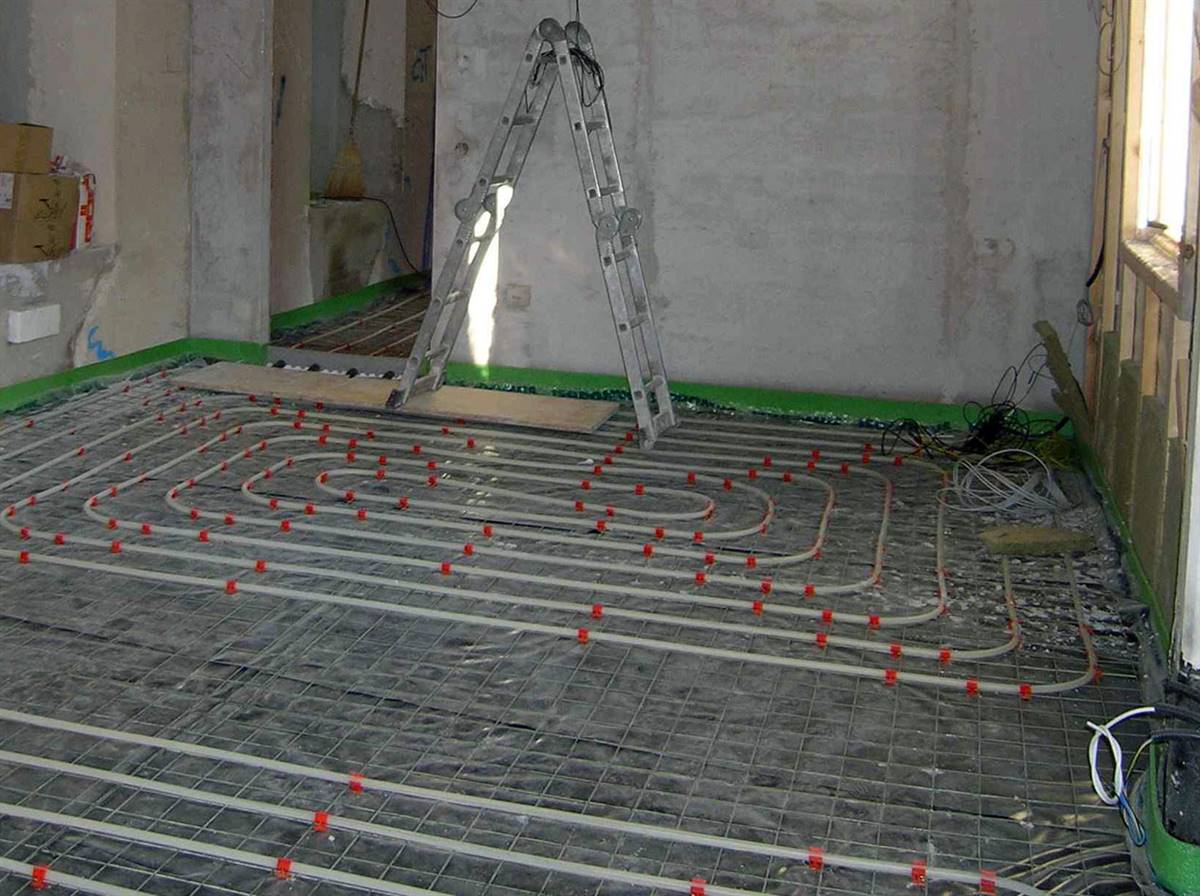
Solution post-intervention: Floor_heating.jpeg
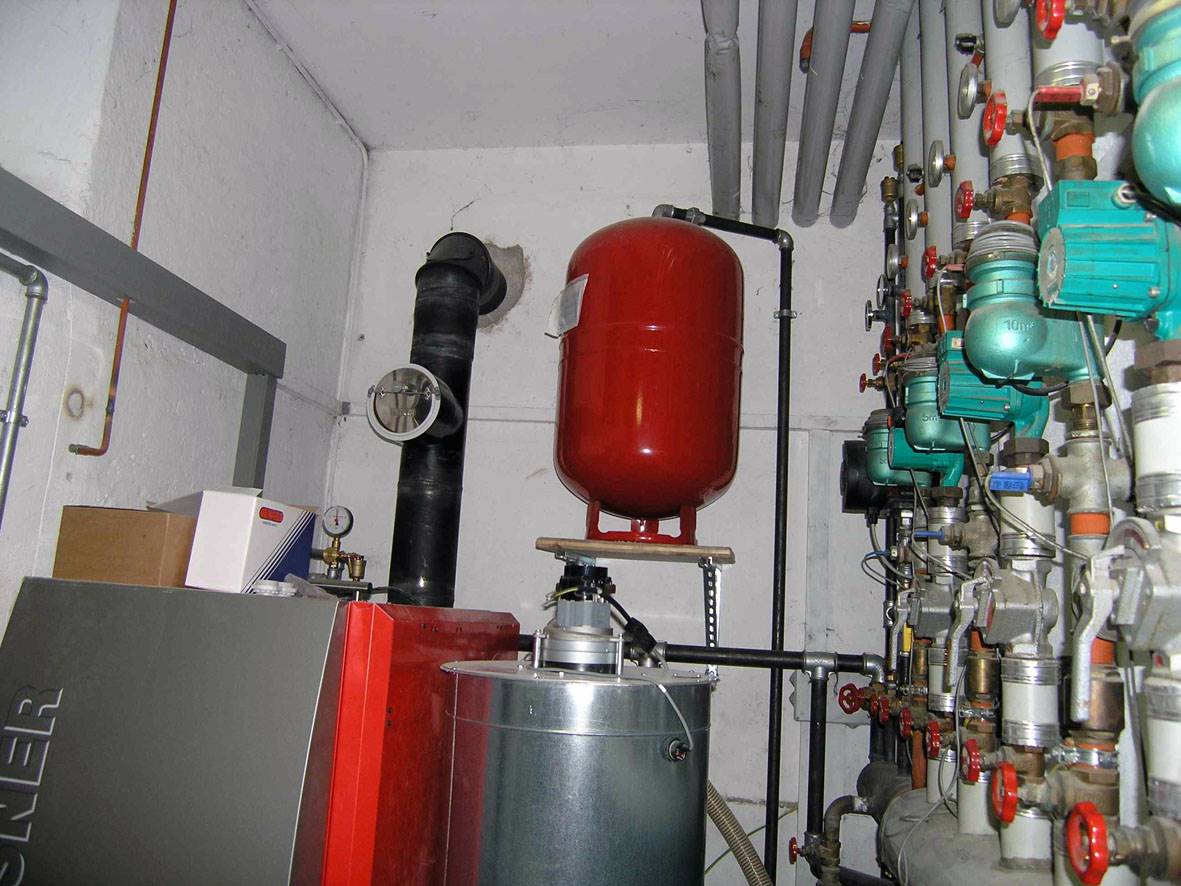
Solution post-intervention: Heat_PelletsBoiler.jpg
Solution post-intervention: RES_biomass.jpeg
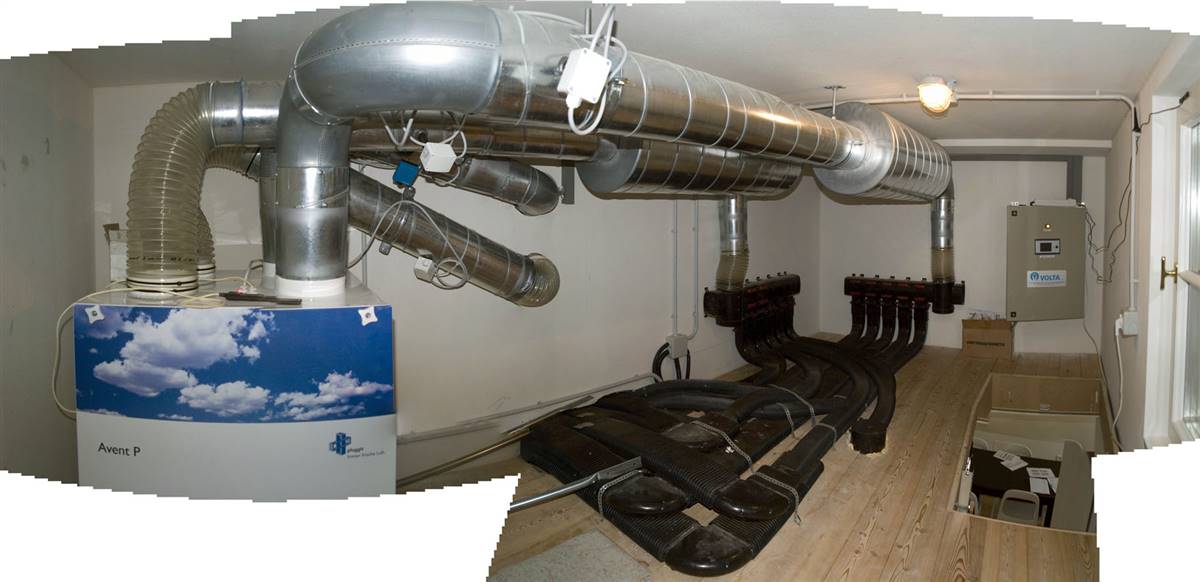
Solution post-intervention: Vent_Crawlspace.jpg
What is the Solution?

Heating The ancient gas boiler was replaced by a pellet boiler, which supplies the all 5 apartments in the building complex with warm water for heating and DHW. While the other four apartments use classical high temperature radiant systems, the retrofitted Orangery here presented has a floor heating system. Ventilation Centralized mechanical ventilation system with heat recovery with ducts integrated in the floor. The ventilation unit is placed in a crawlspace above the kitchen, benefitting from the ample room height of 4m. The distribution ducts are integrated in the anyway refurbished floor, together with the hydraulic system in a concrete layer between thermal and sound insulation. The installed ventilation system provides balanced air flow and achieves a maximum volume flow rate of 300m³/h – to reach the required air change volume of 0.4 m³/h and provide living areas up to 220 m² with fresh air, level 2 with 220 m³/h will be sufficient.

Why Does it work?

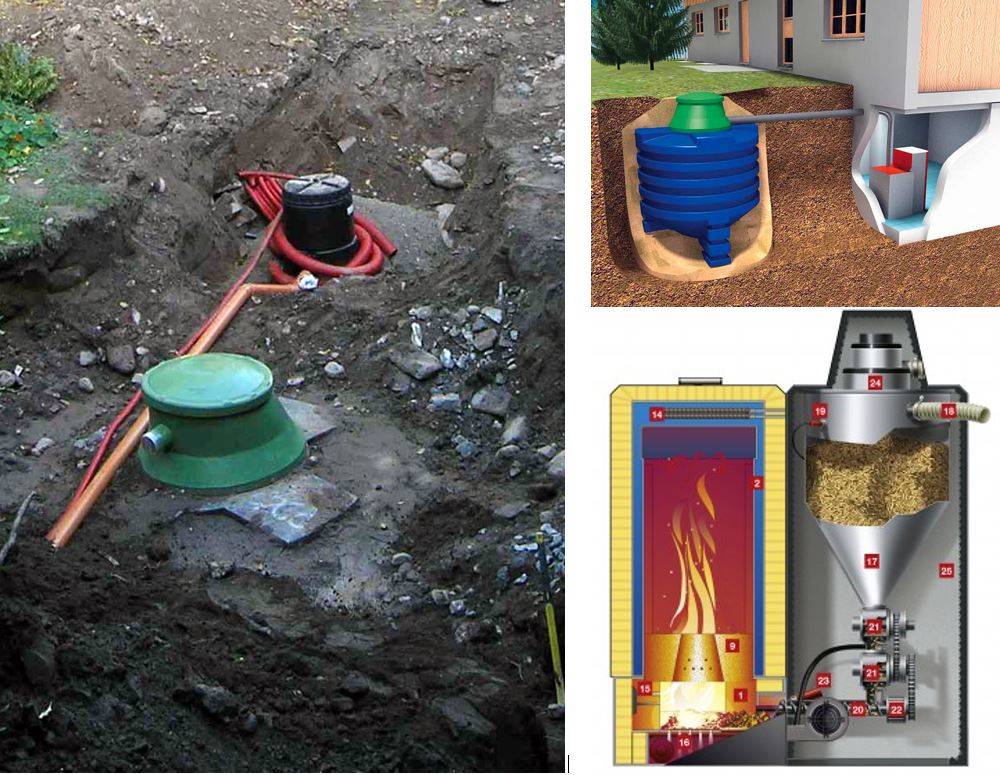
Heating At Ansitz Kofler there was no space available in the house or basement for fuel storage, but the pellets could be stored in a tank buried in the garden and are brought to the reservoir in the heating room with a suction turbine. Burying the tank could be combined with the earth works anyway done for the tubes allowing to pre-heat the ventilation air in winter and pre-cool it in summer. Integrating the distribution ducts in the floor allows to hide them, nevertheless this measure can be adopted only if modifications to the existing floors are not restricted. In the case of Ansitz Kofler the existing floor were tiles on some cm of screed on earth ground – dating anyway from 1925 and not from the Orangerie, it was not worthy of preservation. Ventilation Compatibility with conservation: Integrating the distribution ducts in the floor allows to hide them, nevertheless this measure can be adopted only if modifications to the existing floors are not restricted. Moisture safety: With ventilation systems high indoor humidity which might induce condensation within the construction at any weak point is avoided. Energy improvement: A central system for controlled ventilation with heat recovery ensures not only that the necessary exchange of air takes place automatically but also that the incoming air from outdoors is warmed by cooling the exhaust air (the “Air-to-Air Heat Exchanger” recovers up to 85 percent of the heat from outgoing air). Introducing an automatic summer bypass unit guarantees that the outside air almost completely bypasses the heat exchanger preventing the supply air from being additionally warmed during warm summer months.

PROS
  • Heating
  • Renewable and CO2 neutral source for space heating and DHW (high efficiency and reliability while lowering solid and gaseous pollutant emissions).
  • No visual impact on the ensemble, since the pellets tank could be buried.
  • No material impact, as the pellets boiler itself was installed in the original heating room.
  • Ventilation
  • It provides better air quality, lower humidity and no condensation.
  • Keeping slight negative pressure avoids that warm, humid interior air enter via cracks into the construction (causing moisture issues there).
  • the constant supply of warm air through the heat recovery system can reduce energy costs because the environment temperature is kept constant, this provides greater comfort in cold climates.
CONS
  • Heating
  • Biomass heating technology could have potential disadvantages in terms of required space, emissions and maintenance, compared to conventional heating systems, such as oil or gas boilers.
  • Ventilation
  • Mechanical ventilation systems with heat recovery do require that filters and fans must be kept clean to ensure effective operation (additional maintenance costs).
  • The heat recovery work efficiently a good level of airtightness must be achieved in the rooms where it is installed, this can lead to additional costs.
Heating nominal power
Not available
Heating efficiency
information not available
DHW nominal power
information not available
DHW efficiency
information not available
Cooling unit
No Cooling System
Cooling centralized/decentralized
information not available
Cooling distribution system
information not available
Cooling supply
information not available
Cooling nominal power
information not available
Cooling efficiency
information not available
Ventilation type
Balanced Mechanical Ventilation
Ventilation centralized/decentralized
Centralized
Heat recovery efficiency
0.85
SFP if relevant
information not available

Before retrofit

After retrofit

Before retrofit
Heat generator
Boiler (non condensing)
After retrofit
Heat generator
Boiler (condensing)
Before retrofit
Fuel type
Gas
After retrofit
Fuel type
Biomass
Before retrofit
Centralized/Decentralized
Centralized
After retrofit
Centralized/Decentralized
Centralized
Before retrofit
Distribution system
Water
After retrofit
Distribution system
Water
Before retrofit
Heating supply
Radiators
After retrofit
Heating supply
Radiating Floor
Before retrofit
DHW same as heating system
yes
After retrofit
DHW same as heating system
yes
Before retrofit
DHW heat generator
information not available
After retrofit
DHW heat generator
information not available
Before retrofit
DHW fuel type
information not available
After retrofit
DHW fuel type
information not available
Before retrofit
DHW centralized/decentralized
information not available
After retrofit
DHW centralized/decentralized
information not available

Assessment

Heating
Yes
Cooling
No
Ventilation
Yes
Heat generator
Boiler
Heating centralized/decentralized
Centralized (multi family house/non residential)
Heat supply
Radiating Floor
Heating existing distribution system
No
Circular approach - heating
No
Investment cost - heating
High
Cooling generator
No Cooling System
Circular approach - cooling
No
Investment cost - cooling
Medium High
Ventilaiton strategy
Mechanical Ventilation System
ventilation centralized/decentralized
Centralized (multi family house/non residential)
Heat recovery
Yes
Circular approach - ventilation
No
Investment cost - ventilation
High

Location

Bolzano, Italy - 260m
Climatic Zone:Dfa