WallAnsitz Kofler - Internal and External Insulation - Stone wool insulation panels - 180 mmAnsitz KoflerDetails
Kohlerhaus - Internal and External Insulation - Reed-mat insulation - 140 mm
Solution Year
2011
Building Age
before 1600
Listed Building
No
Conservation Area
Yes
Documenting Institution
Eurac Research
Location
Innichen - San Candido, Italy - 1175m
Building Type
Residential (urban)
Structure
Stone masonry wall
The Building
Kohlerhaus
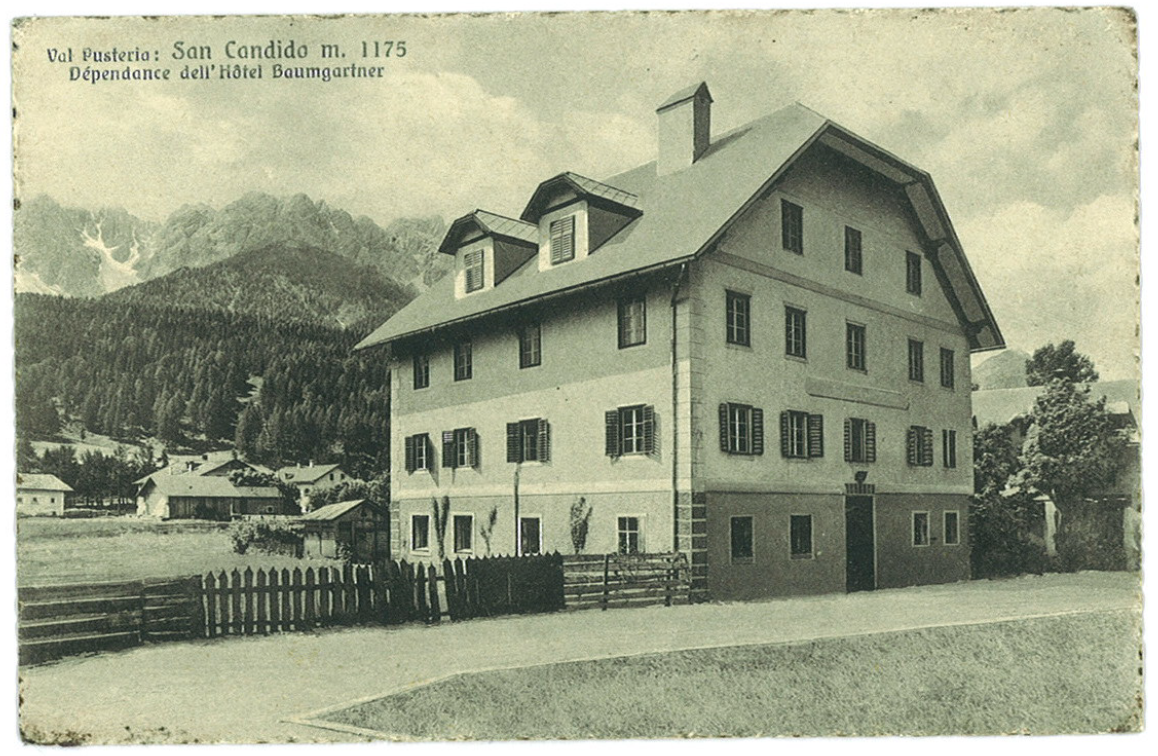
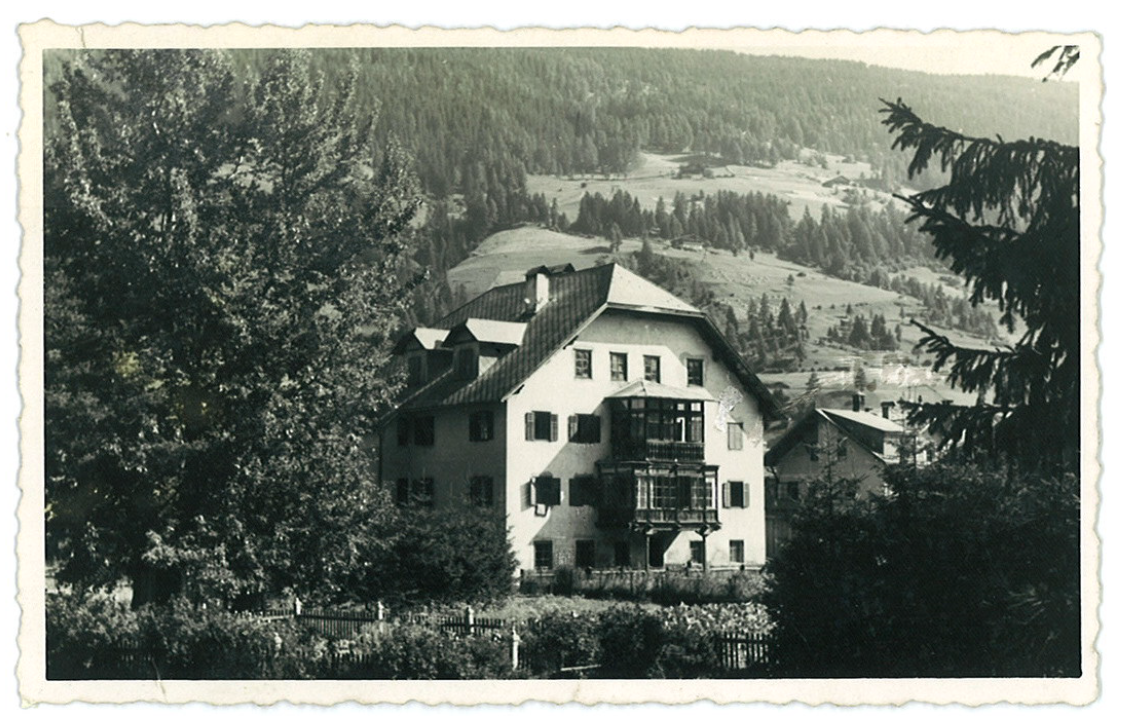
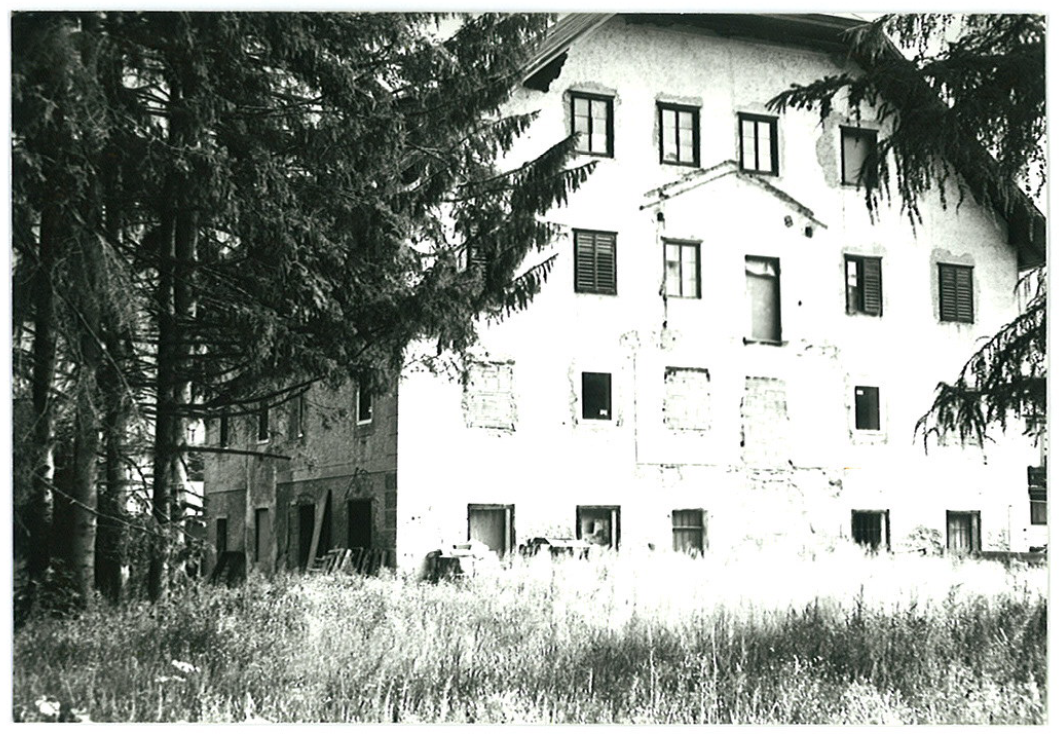
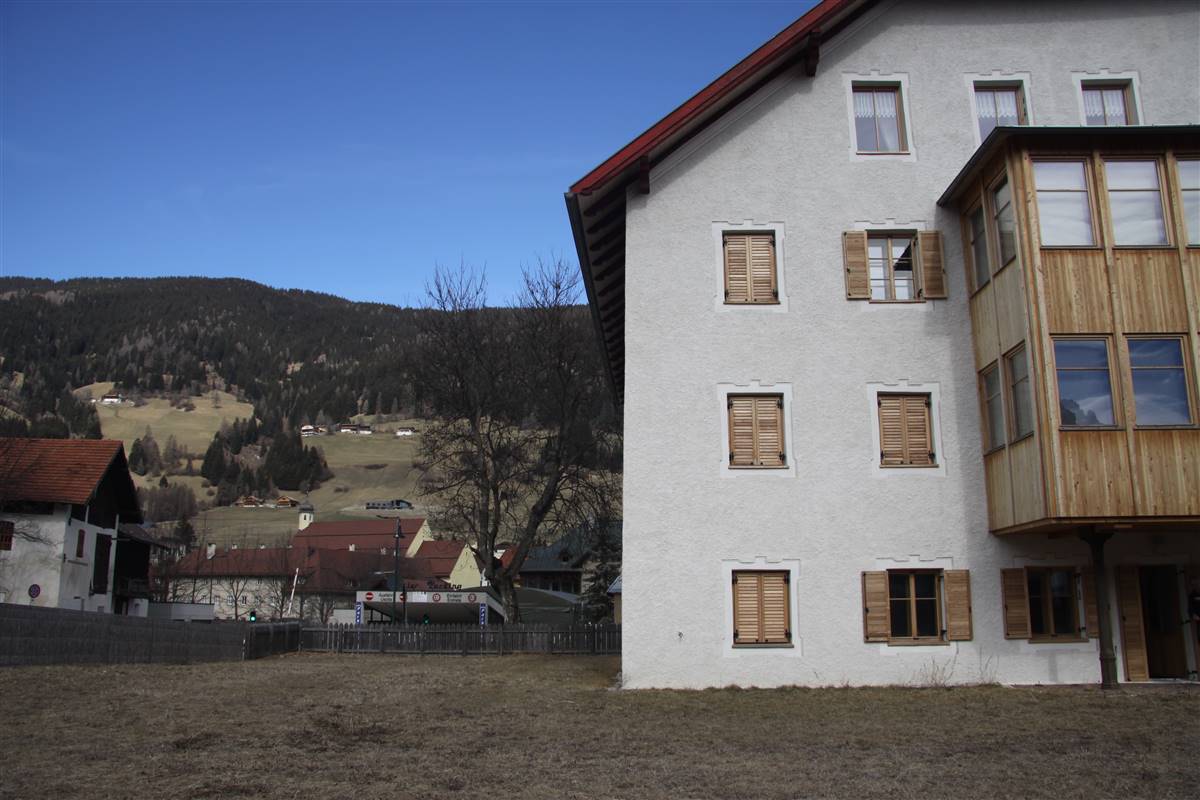
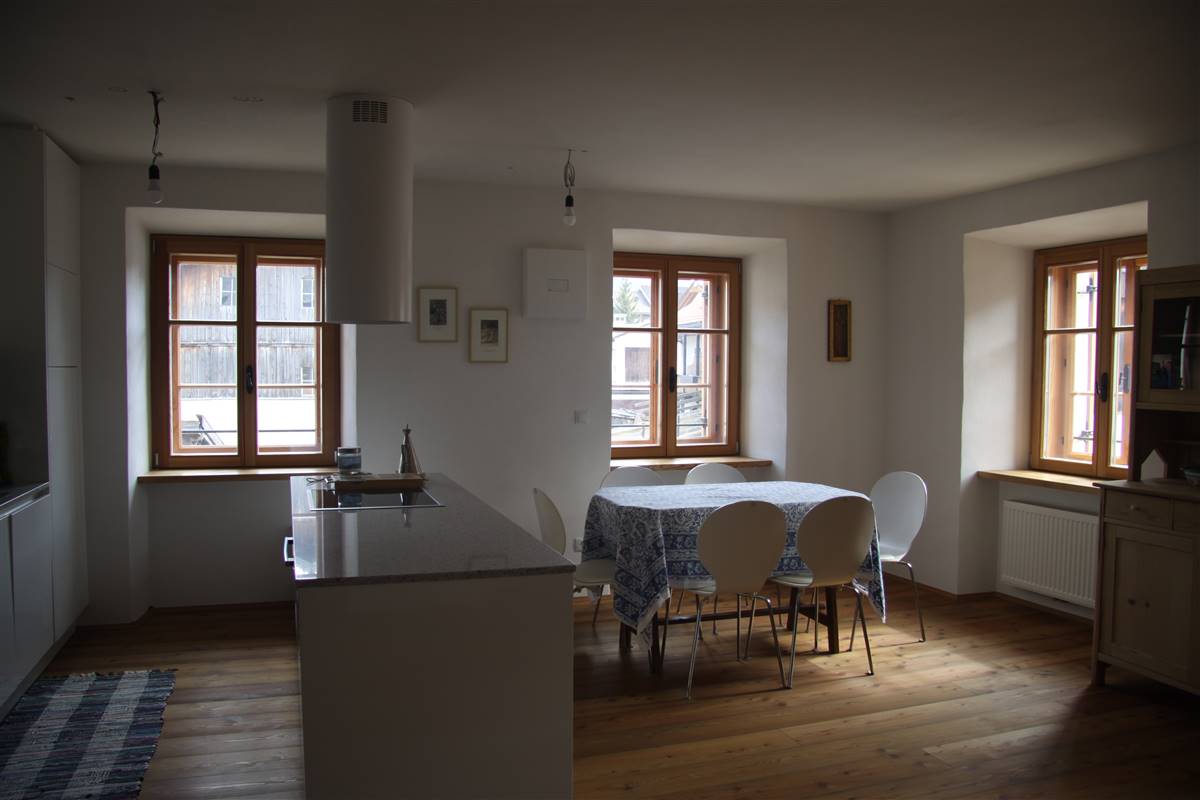
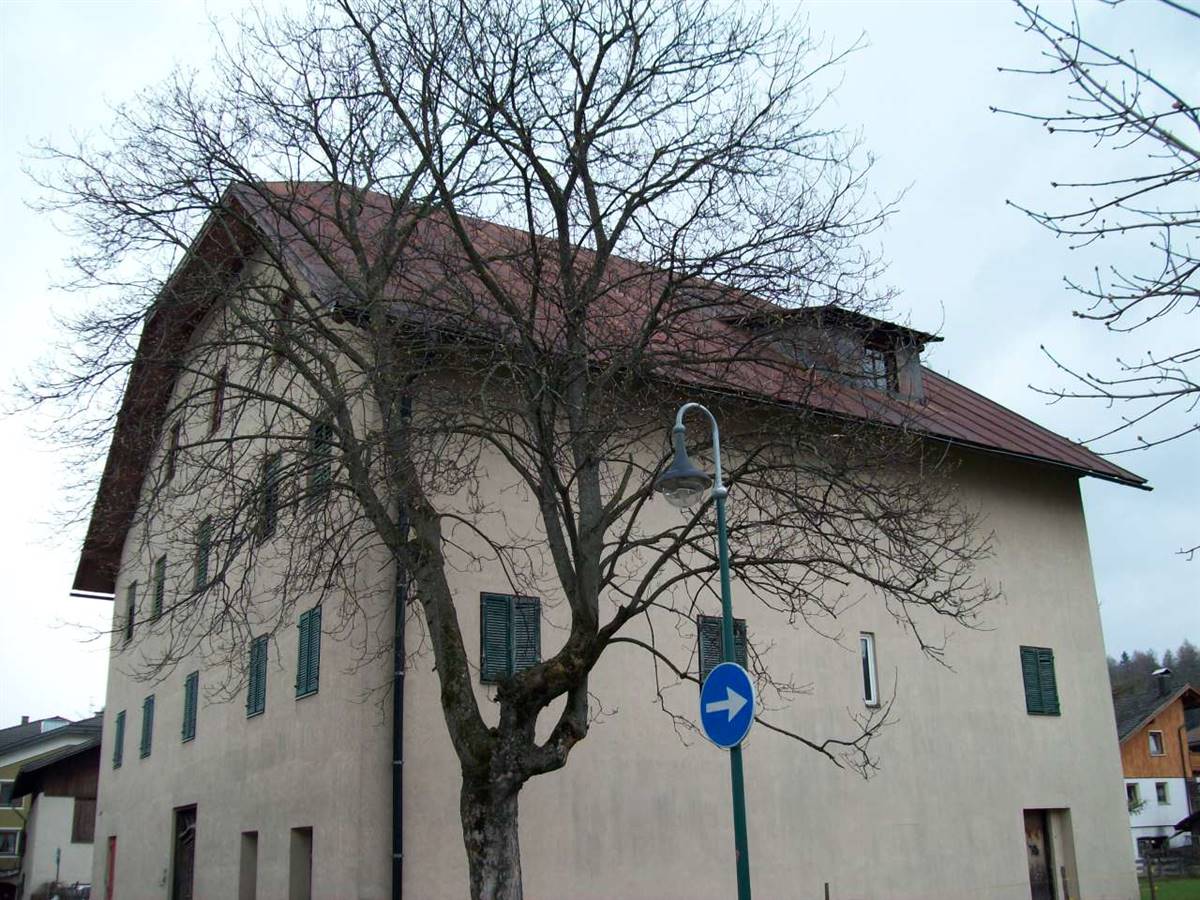
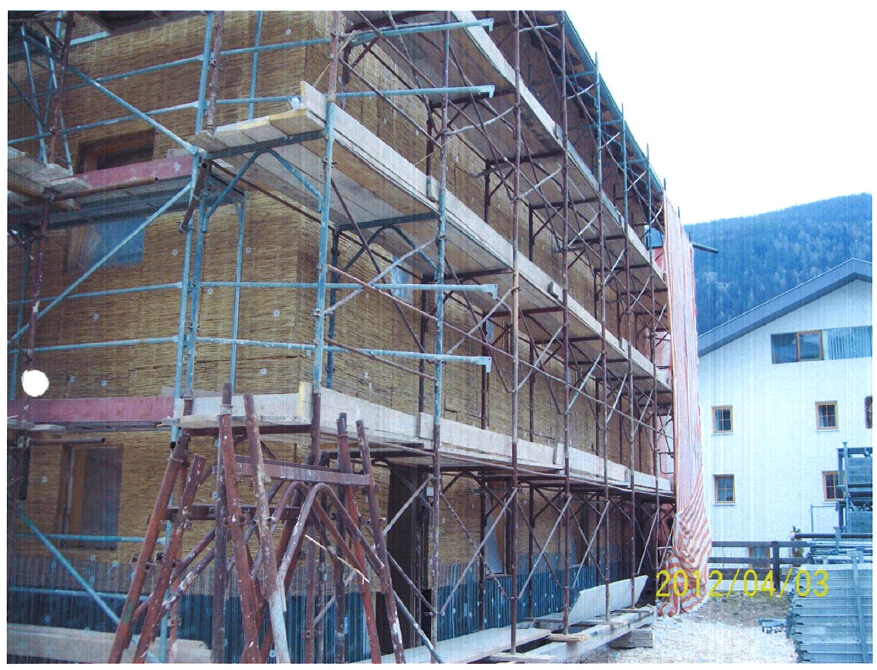
The building is a big residential house, part of the building is dated 14th century. The use of the building changed a lot of times. With the last renovation ten flats were designed: one is permanently occupied; the others are holiday apartments. The historical research carried out by the architect revealed the rich past of the building, that served as priest house, hotel or guest house. The retrofit of the building included external insulation the wall with reed mats, new replica windows and new building services (radiating heating and mechanical ventilation).
More DetailsThe Solution
What is the Solution?
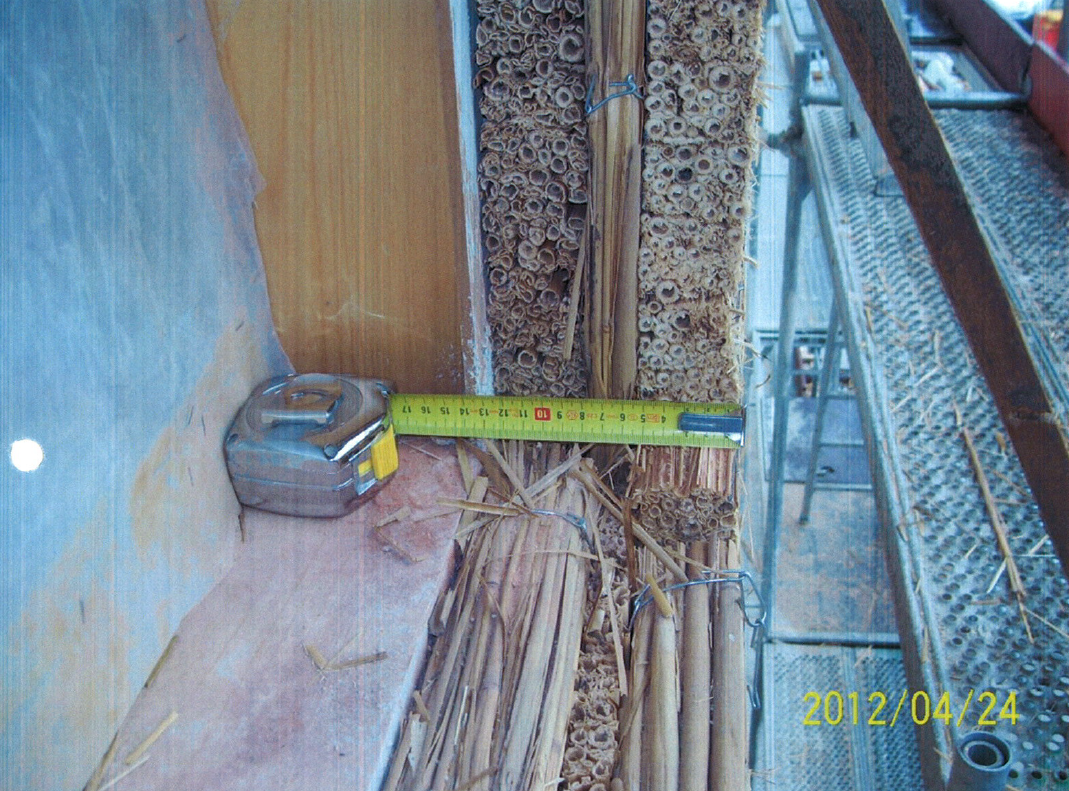
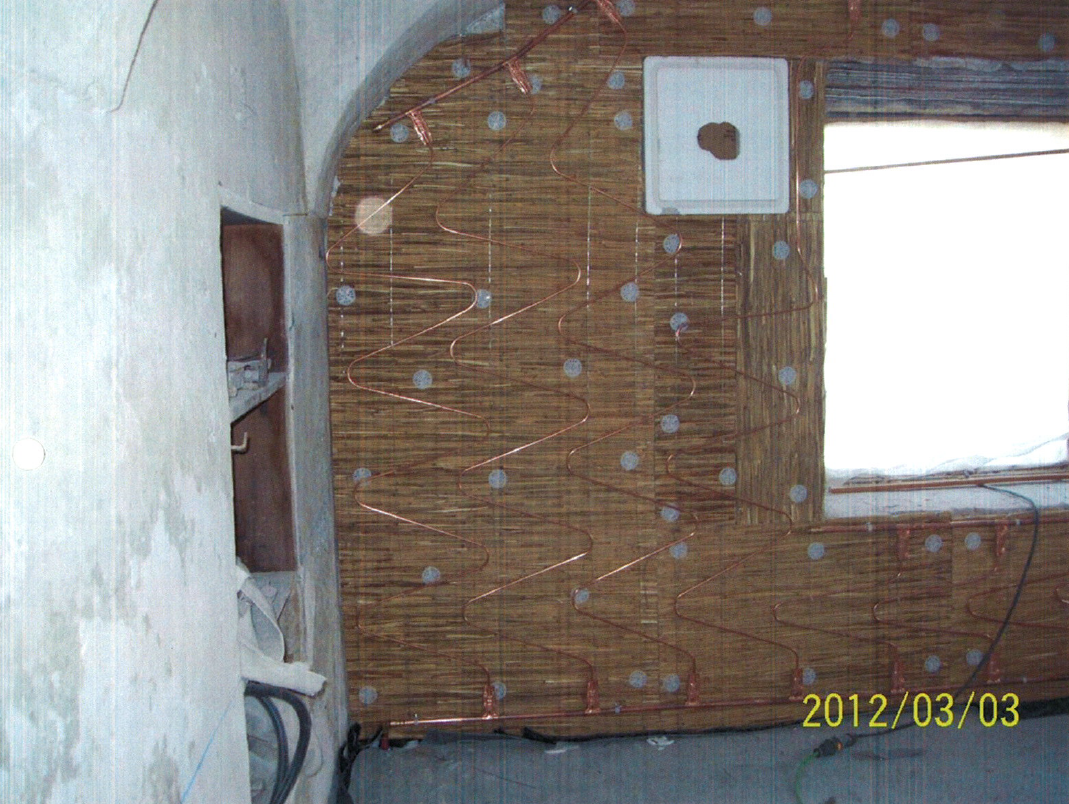
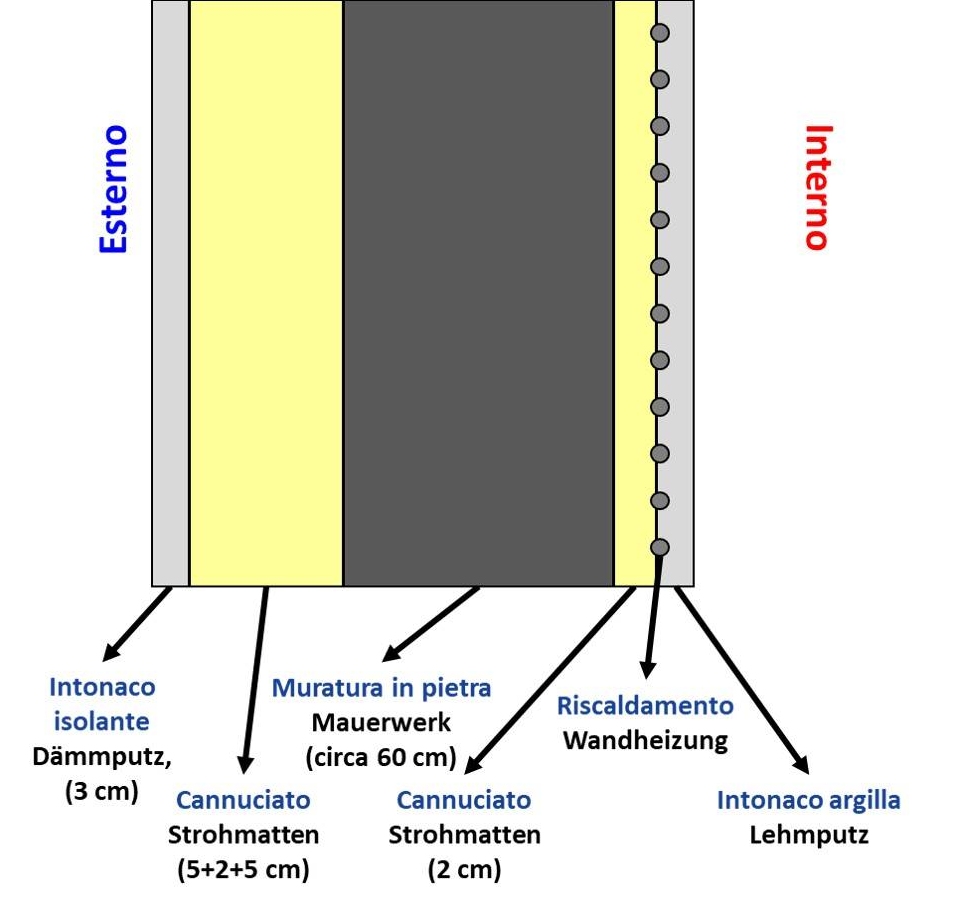
A massive stone wall was renovated with a combination of external and internal insulation using reed mats and insulating plaster. On the outside, 12 cm of reed mats and 3 cm of insulating plaster were used and internally 2 cm of reed mat and clay plaster were applied. Only in the ground floor wall heating system is installed. This due to two reasons: the absence of niches in the ground floor (present instead in the upper floors) makes it difficult to position the radiators; the wall heating system helps in case of rising damp.
Why Does it work?
A natural material for the insulation of the wall was chosen to respect the existing stone wall. Moreover, the architect tried to reconstruct the external aspect of the wall as it was in 1784: the window framing and the type of plaster are part of this choice. The coupled use of external and internal insulation makes the solution moisture safe. The wall heating system in the ground floor intends to stop the rising damp.
PROS
- Use of natural material.
- The low risk of interstitial condensation because the wall is warmer thanks to the external insulation.
CONS
- The solution cannot be used if the external wall is decorated and changes the volume of the building.
- The depth of the opening’s changes.
- The material is prone to decay in case of water infiltration.
Insulation material
Reed mat
Insulation thickness
140
Thermal conductivity
0.065
Health issue
information not available
Technical drawings
Additional documentation
Installation Method
On the outside 12 cm of reed insulation and on the inside 2 cm with clay plaster were installed. Only in the ground floor wall heating system is installed. This due to two reasons: the absence of niches in the ground floor (present instead in the upper floors) makes it difficult to position the radiators; the wall heating system helps in case of rising damp.
Moisture Management and Technical Compatibility
The coupled use of external and internal insulation makes the solution moisture safe. The wall heating system in the ground floor intends to stop the rising damp.The temperature, relative humidity and the CO2 level are monitored in the bedroom and in the living room in two flats; outside temperature and relative humidity are also monitored. Interstitial temperature and relative humidity are monitored between the external insulation and the stone wall, within the stone wall, between the internal insulation and the stone wall, and the internal and external surface temperature.
Airtightness
Attention was paid to the joints walls-roof and walls- windows
Before retrofit
After retrofit
Before retrofit
Wall thickness
640
After retrofit
Wall thickness
796
Before retrofit
Wall build-up
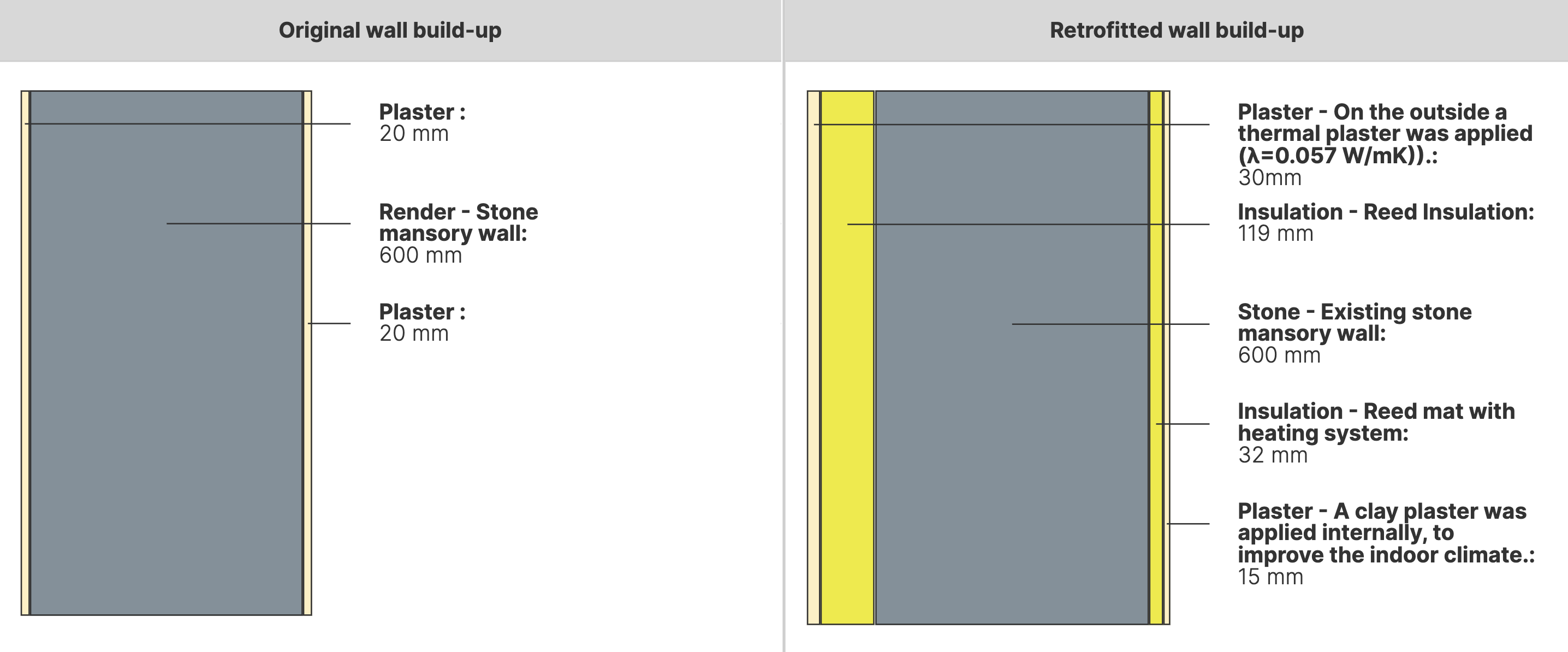
Plaster [20], Stone_masonry_wall [600], Plaster [20]
After retrofit
Wall build-up
Thermal plaster [30mm], Reed insulation [119mm], Stone masonry wall [600mm], Reed insulation with heating system [32mm], Plaster [15mm]
Before retrofit
U-value
2
After retrofit
U-value
0.33
Assessment
Wall type
Masonry Wall
Insulation position
Inside and Outside
Moisture handling approach
Moisture-Open
Plaster/imperfections
No
Wall thickness increase
Large Variation (> 4 cm)
Wall U-value
0.25 < U <= 0.3333
Insulation type
Natural: biogenic
Circular approach
Yes
Circular approach (Additional info)
The use of biosourced material participate to the circular economy (reversibility, local economy, use of organic waste)
Reversibility
Yes
Investment cost
High
Location
Innichen - San Candido, Italy - 1175m
Climatic Zone:Dfc