WallCascina Mangarda - External Insulation - Rock wool insulation boards - 140 mmCascina MangardaDetails
Mariahilferstrasse - External Insulation - Aerogel insulating plaster - 55 mm
Solution Year
2018
Building Age
1850-1899
Listed Building
No
Conservation Area
No
Documenting Institution
Eurac Research
Location
Vienna, Austria - 199m
Building Type
Residential (urban)
Structure
Brick masonry wall
The Building
Mariahilferstrasse
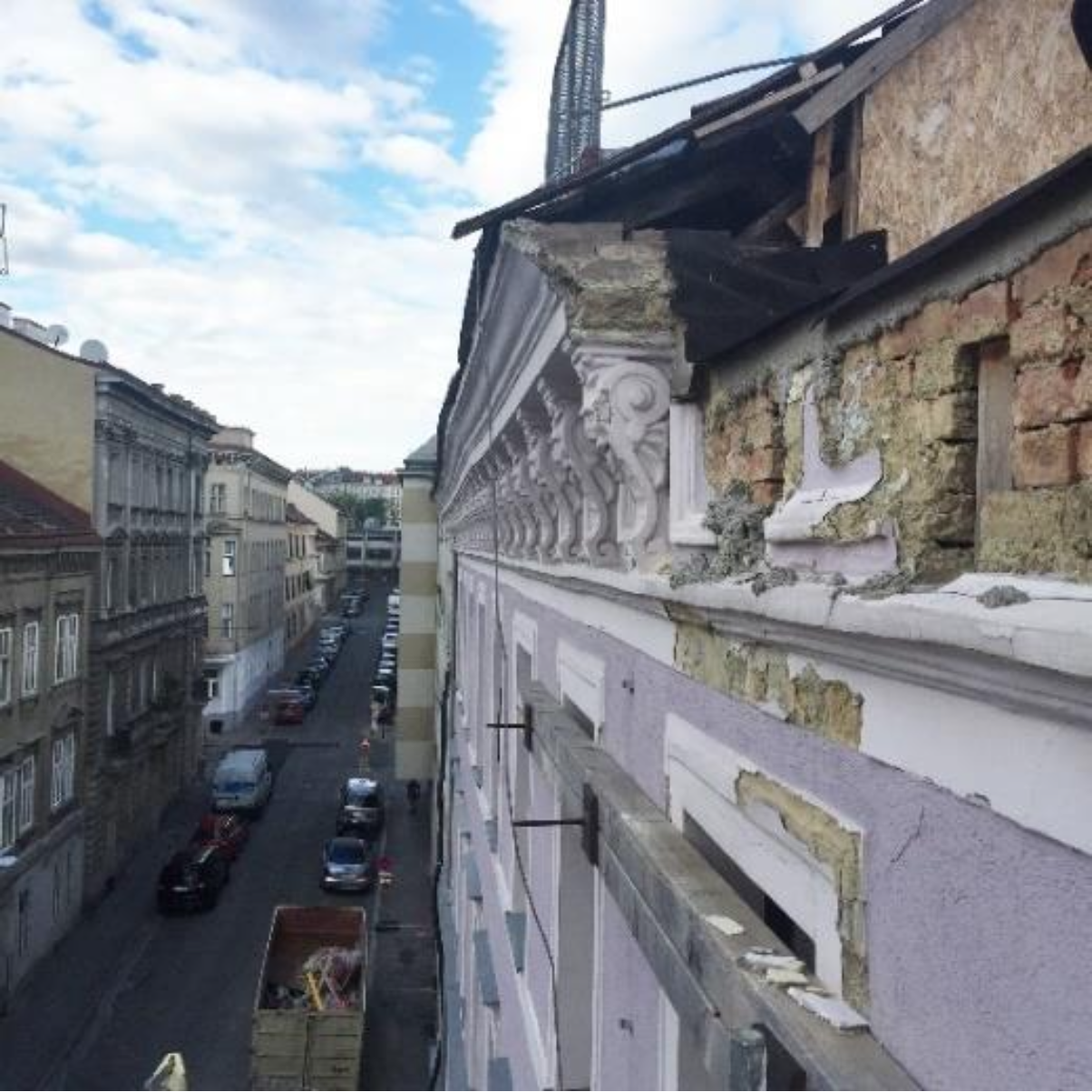
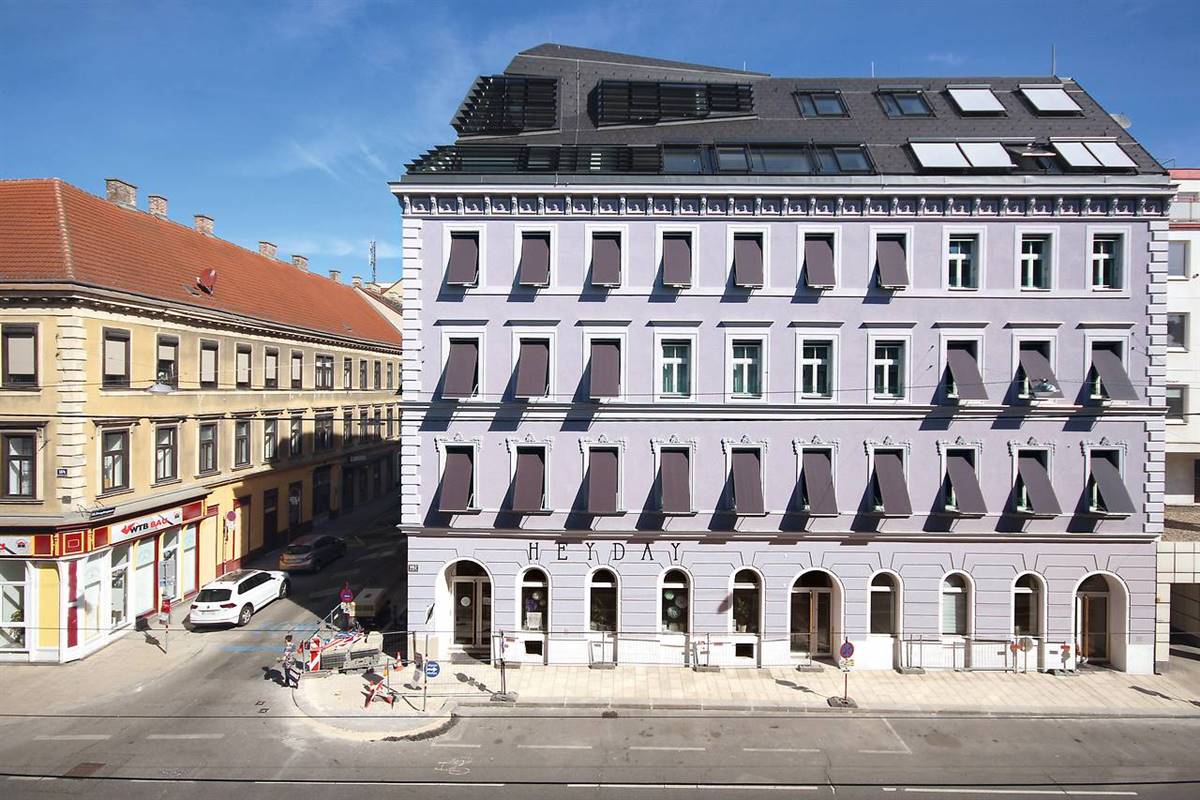
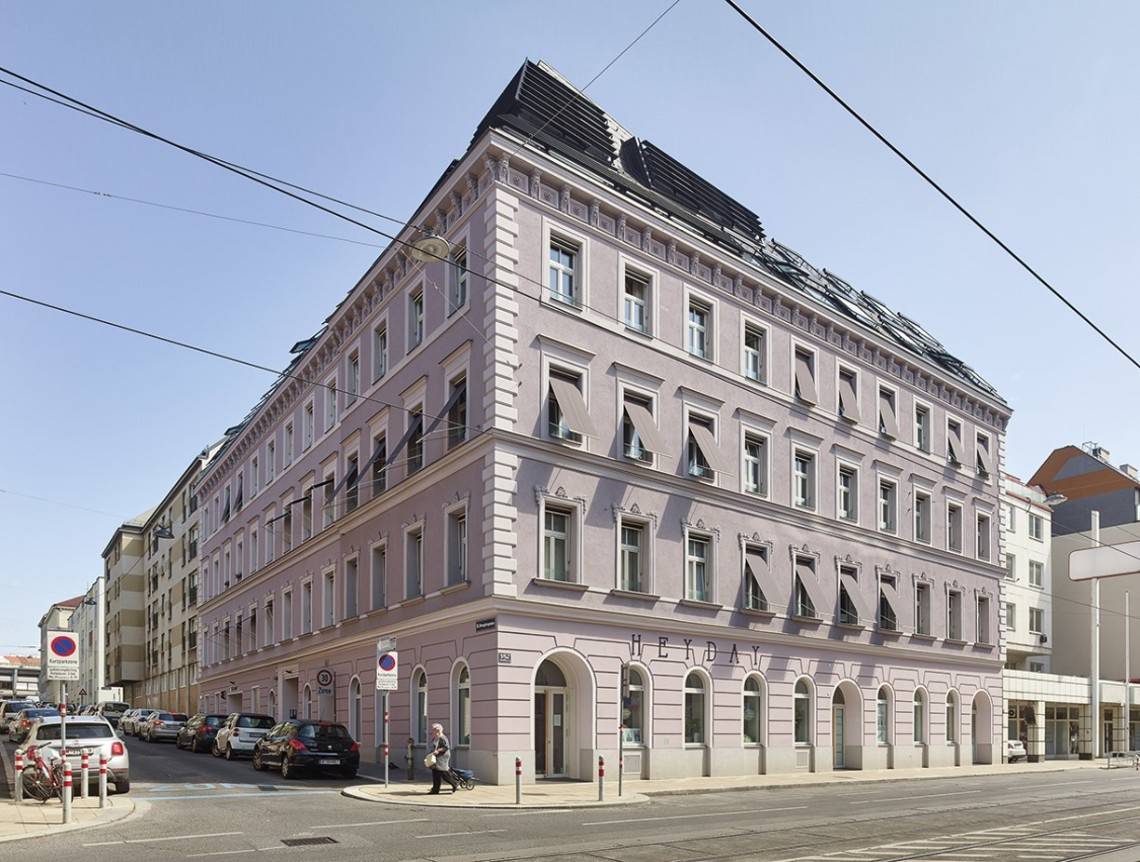
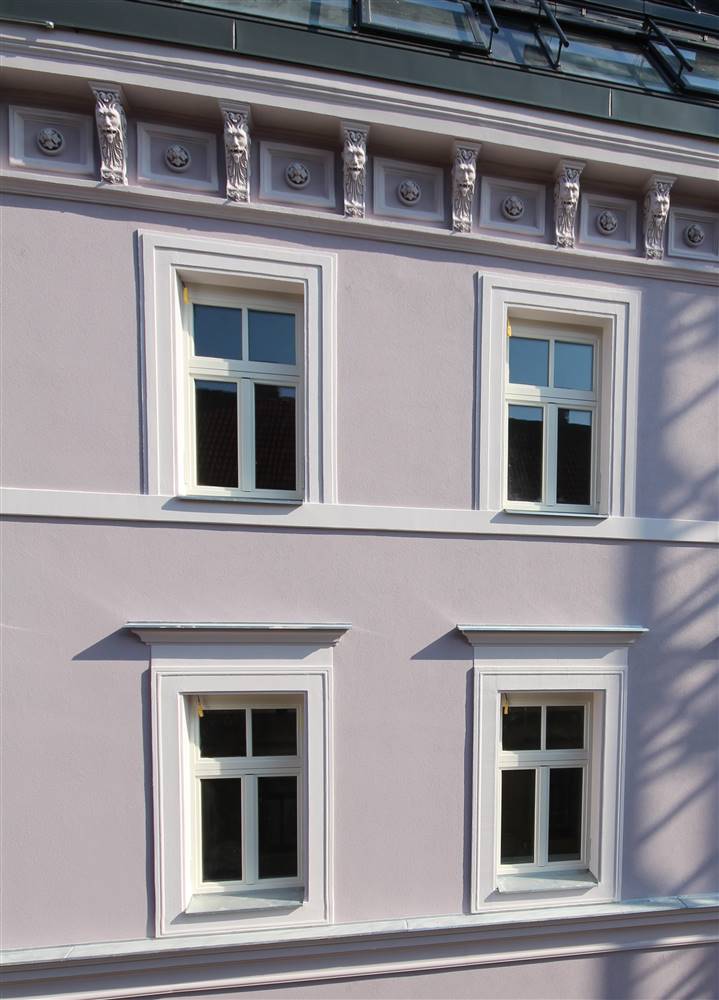
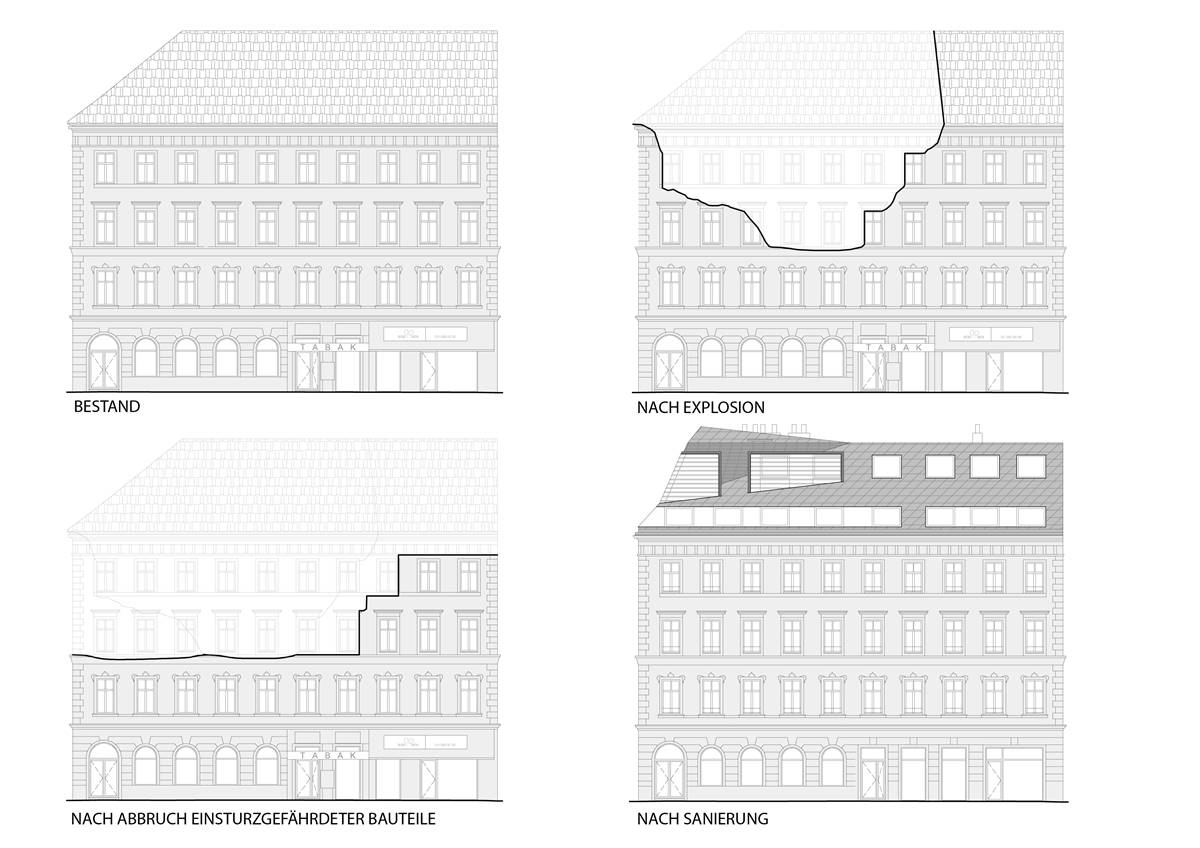
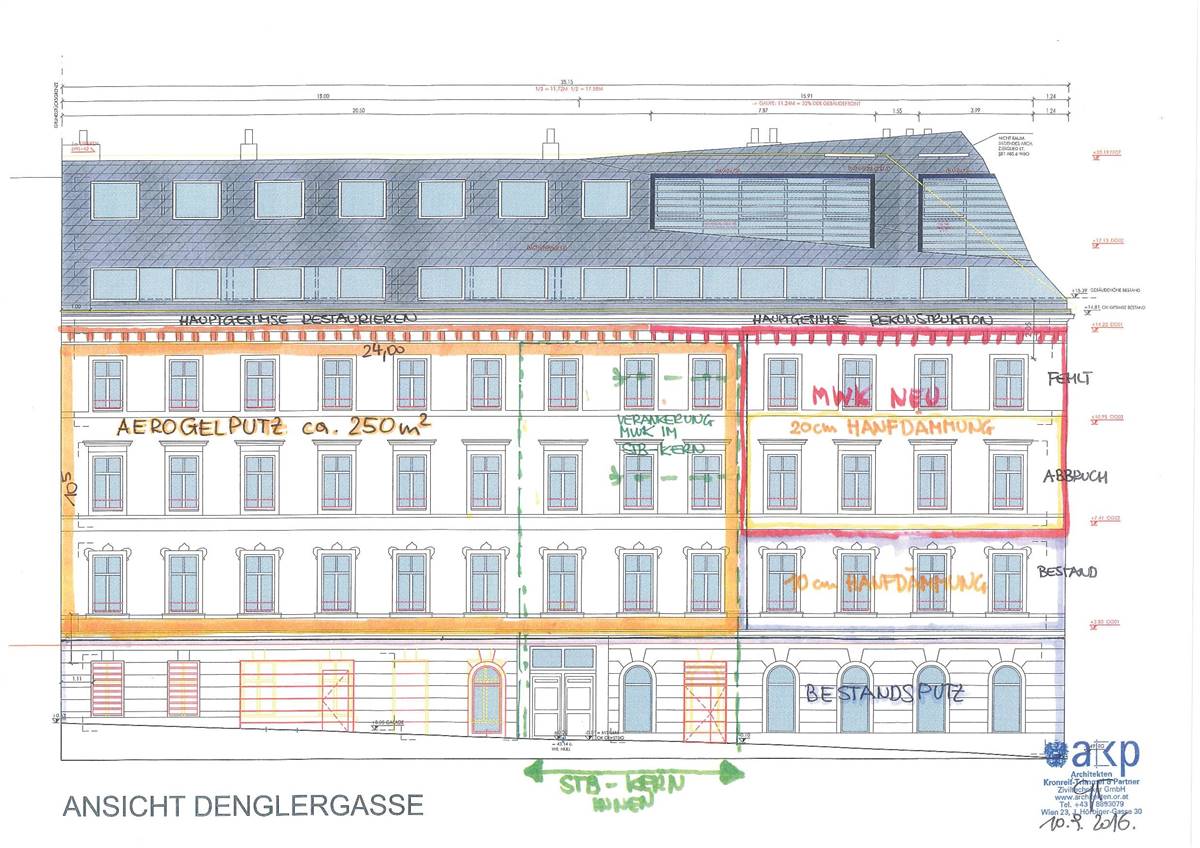
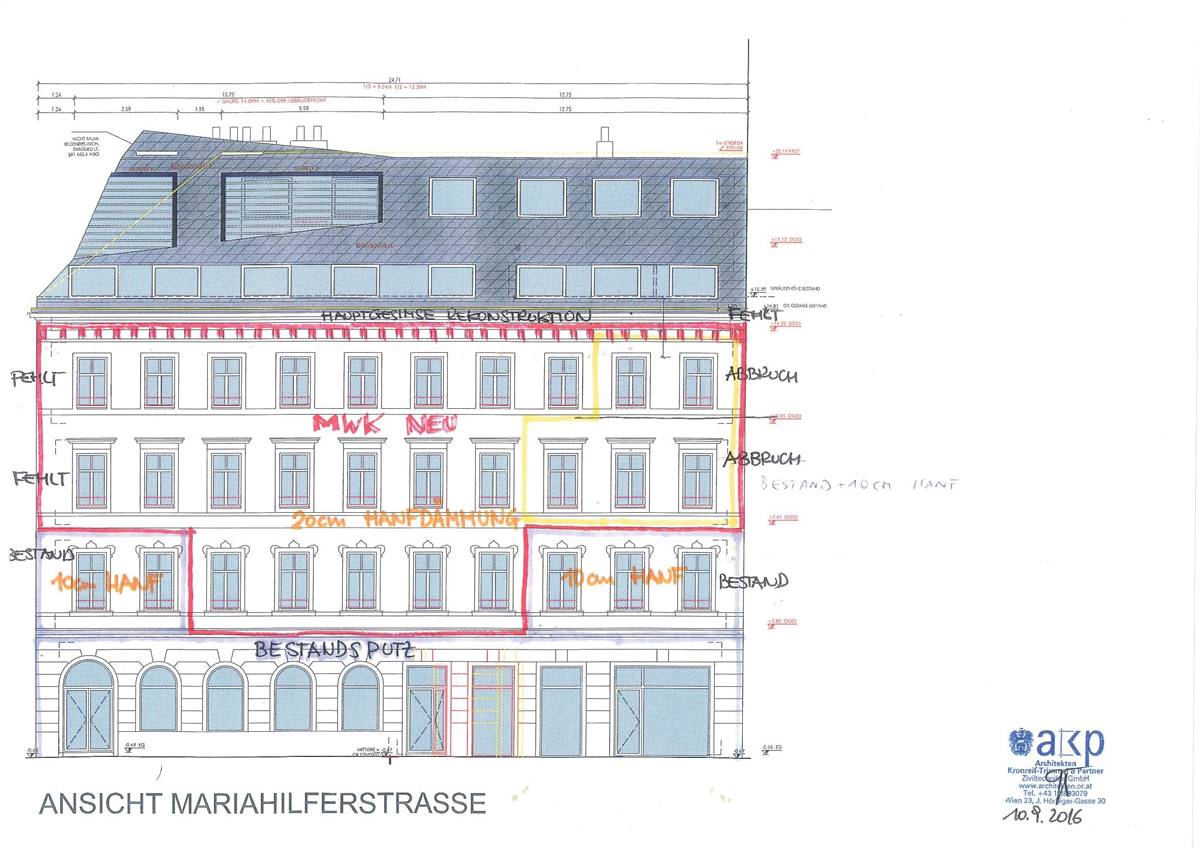
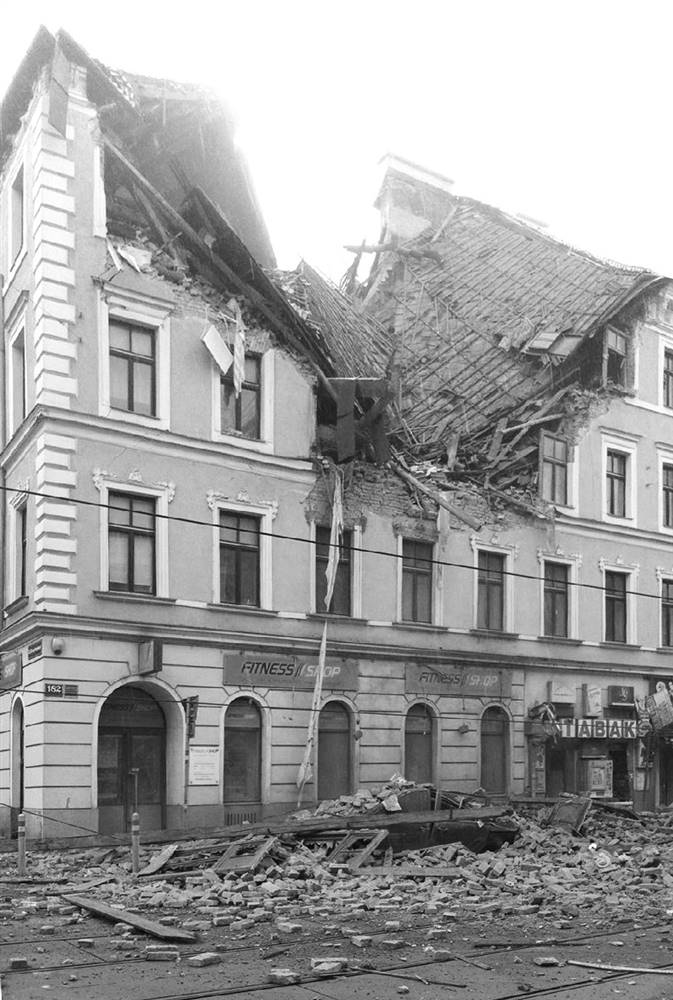
The building, constructed before 1872 in Vienna, was severely damaged by a gas explosion in 2014. During its reconstruction, an innovative aerogel high-performance insulating plaster system was tested to improve energy efficiency while preserving the historic facade. The revitalized building now includes 29 residential units, 9 of which are in a new two-storey attic floor, 270 m² of commercial space, and a garage with 7 parking spaces and an e-charging station. This project demonstrated the feasibility of modernizing historic structures with advanced insulation technology.
More DetailsThe Solution
What is the Solution?
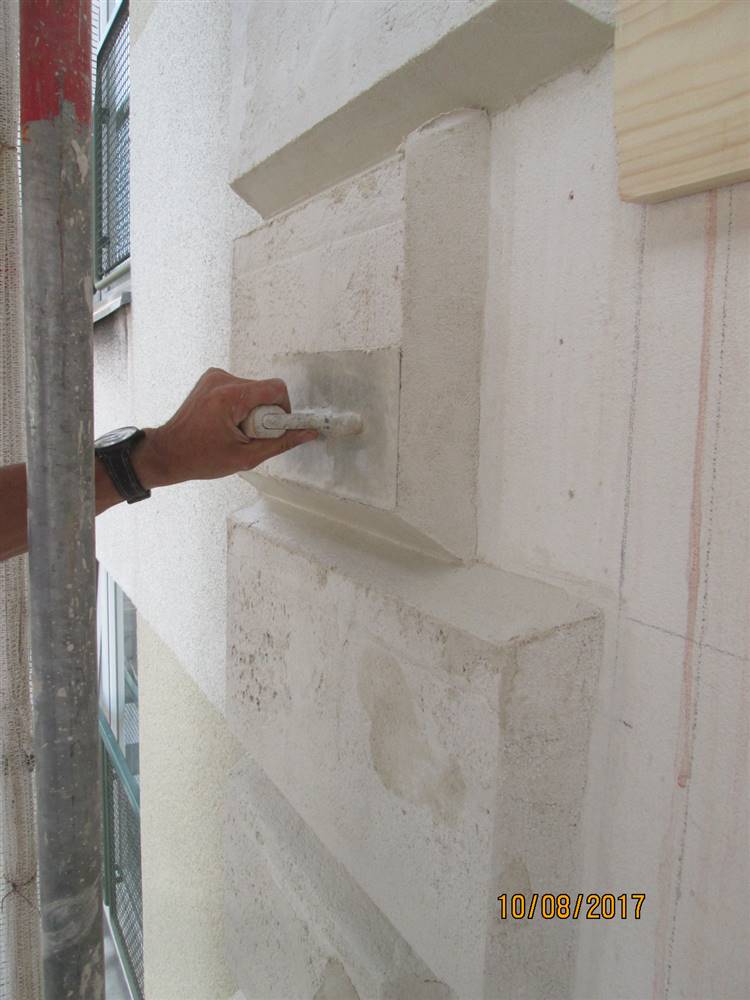
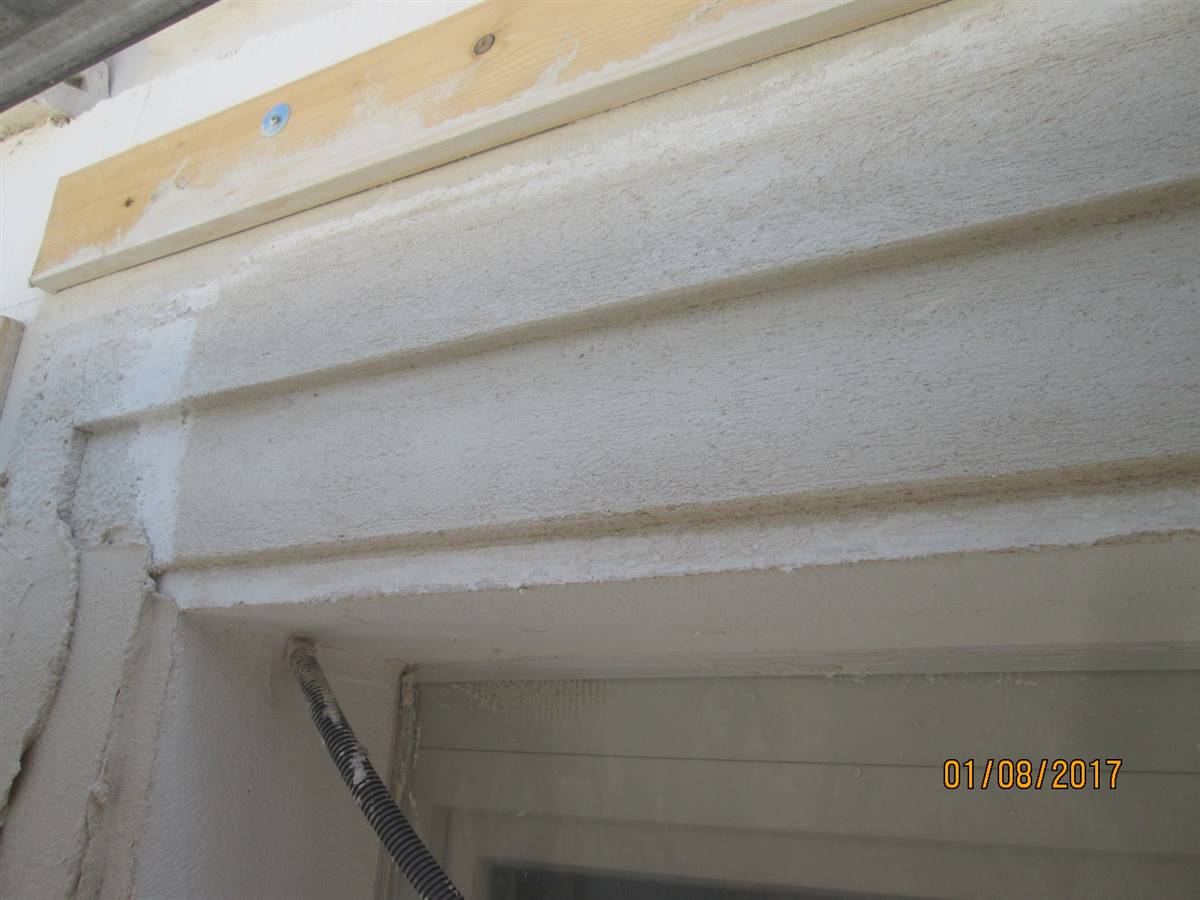
Application of the aerogel high-performance insulating plaster system on the existing masonry was carried out for the first time on a structured facade (in close cooperation between architects, plaster manufacturer and executing company).
Why Does it work?
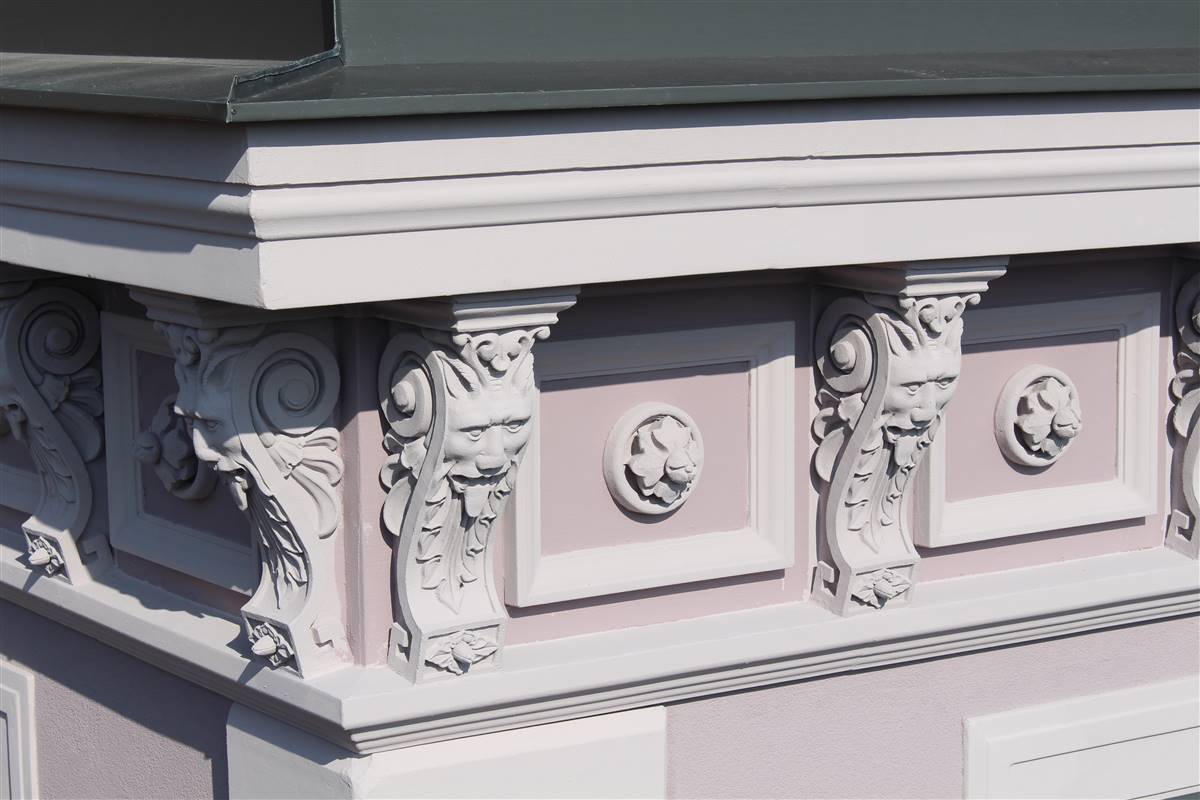
From a heritage point of view, the visible result is the successful renovation of a historic building in which it was possible to create the external appearance in such a way that there is no difference between the old building and the reconstruction. The aerogel high-performance insulating plaster is mineral and open to diffusion, making it suitable for exterior use. Aerogels are solids of amorphous silica, highly porous with an air content of over 90 percent by volume. The air-filled pores are only a few nanometres in size, which means that the resistance to the transfer of heat (energy) is very high.
PROS
- Aerogel plaster is an option that is available on the market and has been tested in projects to achieve the balancing act between preserving the external appearance and simultaneously meeting energy efficiency standards and is therefore particularly suitable for the renovation of historic buildings. In this project, the high structural and design requirements were fully met because all the original proportions of the façade could be retained.
CONS
- Heat flow measurements showed that the expected thermal performance was not achieved. The heat transfer coefficients determined from the measurement are significantly higher than the values expected from the building physics calculation.
- The most probable cause lies in the assumptions underlying the calculation for the thickness of the plaster or the thermal conductivity of the plaster.
- The following hypotheses can be made for the cause of the deviations:
- The plaster thickness of the aerogel plaster has a significant influence on the thermal resistance of the entire wall structure due to its low thermal conductivity. Even small deviations in the layer thickness have a significant effect on the results of the U-value calculation.
- Similarly, the thermal conductivity of the aerogel plaster has a major influence on the resulting U-value.
Insulation material
Aerogel high-performance insulating plaster
Insulation thickness
55
Thermal conductivity
0.028
Health issue
information not available
Technical drawings
Additional documentation
Installation Method
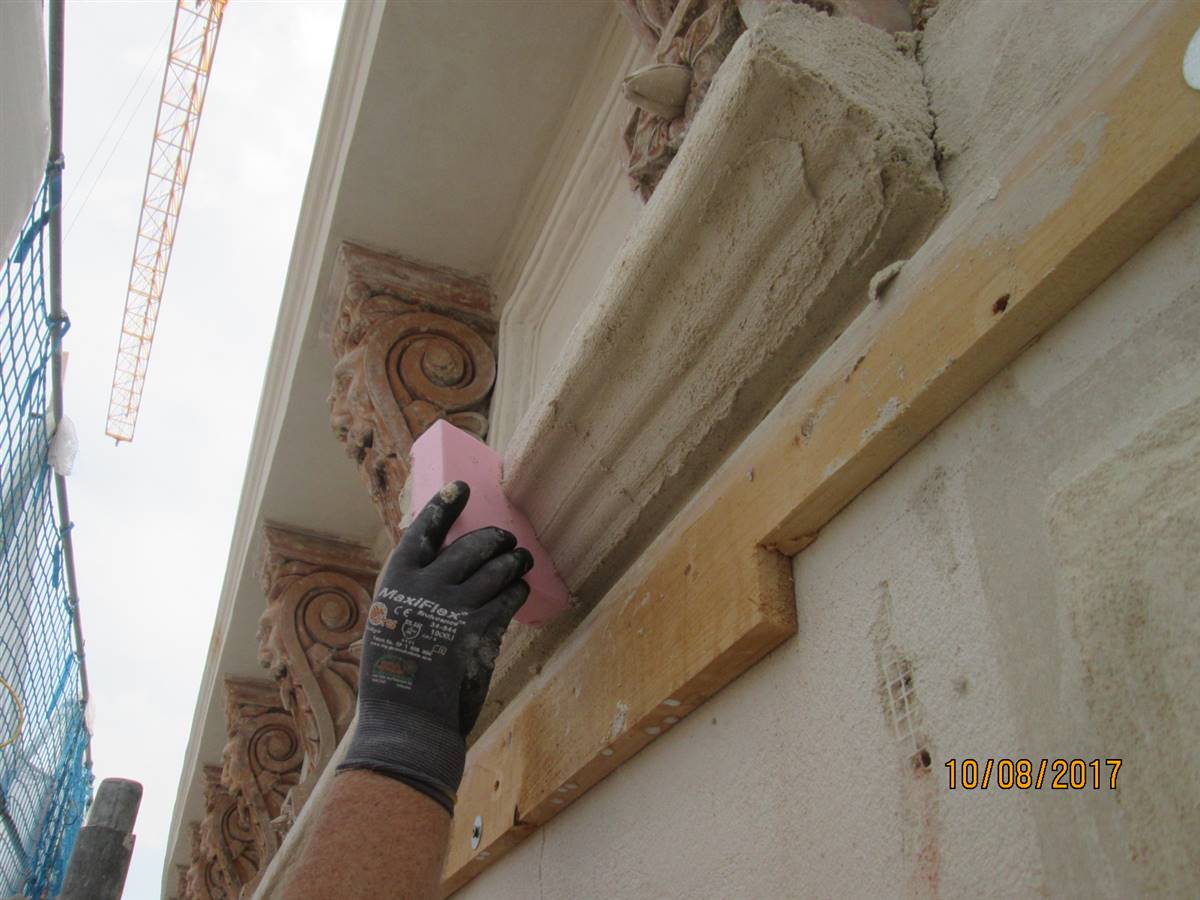
A layer thickness of around 5.5 cm was applied to approx. 205 m² of facade area. For this purpose, the old plaster first had to be chipped off and the pre-spray work carried out before the aerogel plaster was applied by machine and in a single operation. After completion of the draught parts, cornices etc. (also with aerogel plaster), the coating was applied.
Moisture Management and Technical Compatibility
With regard to the room air humidity, it can be seen that in two reference apartments the winter room air humidity decreases to about 20 % and can therefore already be classified as dry. The maximum room air humidity, on the other hand, is almost below 60 %, so there is no risk of condensation damage.
Airtightness
The renovation improve the envelope's air-tightness. Air exchange rate: n50 = 1,0 1/h
Before retrofit
After retrofit
Before retrofit
Wall thickness
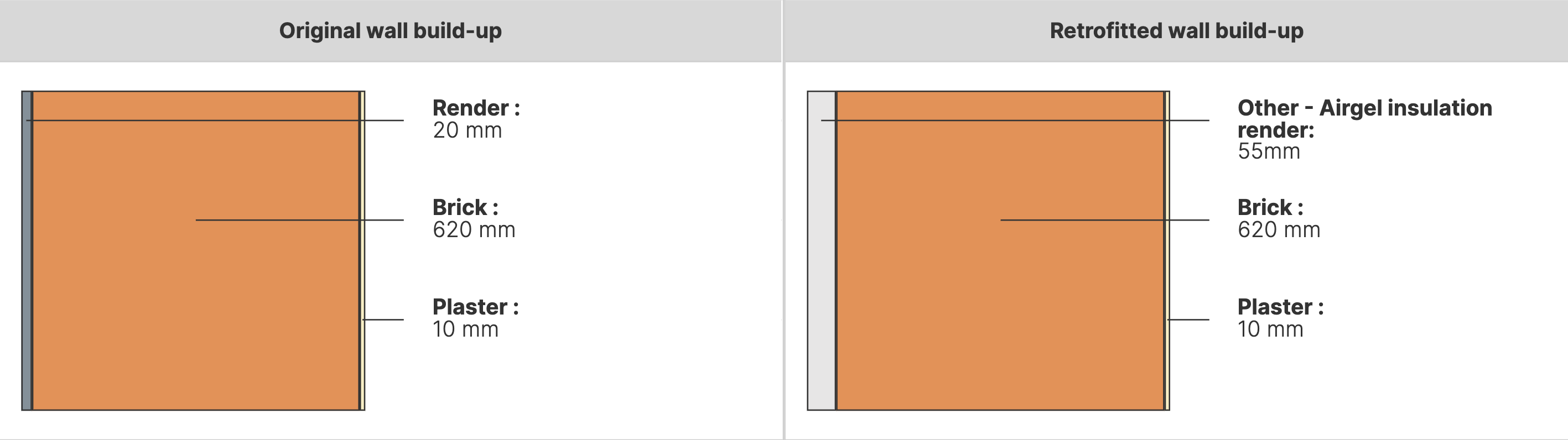
650
After retrofit
Wall thickness
685
Before retrofit
Wall build-up
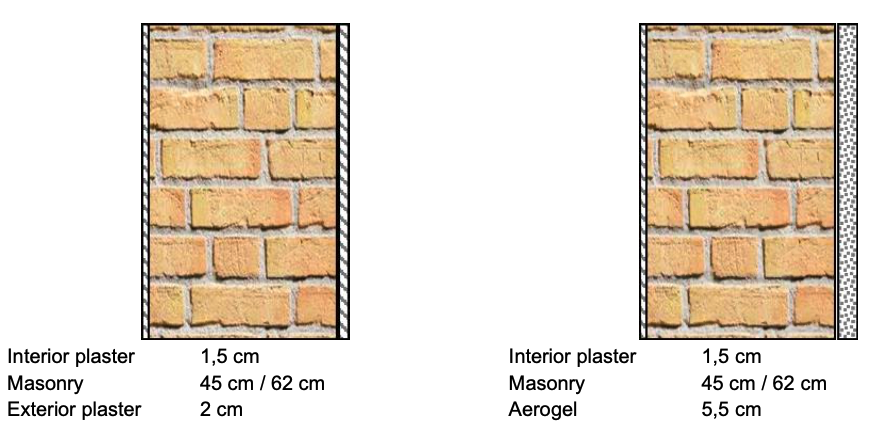
Render [20mm], Brick [620mm], Plaster [10mm]
After retrofit
Wall build-up
Aerogel insulation render [55mm], Brick [620mm], Plaster [10mm]
Before retrofit
U-value
1.13
After retrofit
U-value
0.301
Assessment
Wall type
Masonry Wall
Insulation position
Outside
Moisture handling approach
Moisture-Open
Plaster/imperfections
Yes
Wall thickness increase
Small Variation (< 4 cm)
Wall U-value
0.25 < U <= 0.3333
Insulation type
Synthetic
Circular approach
No
Reversibility
No
Investment cost
High
Location
Vienna, Austria - 199m
Climatic Zone:Cfb